

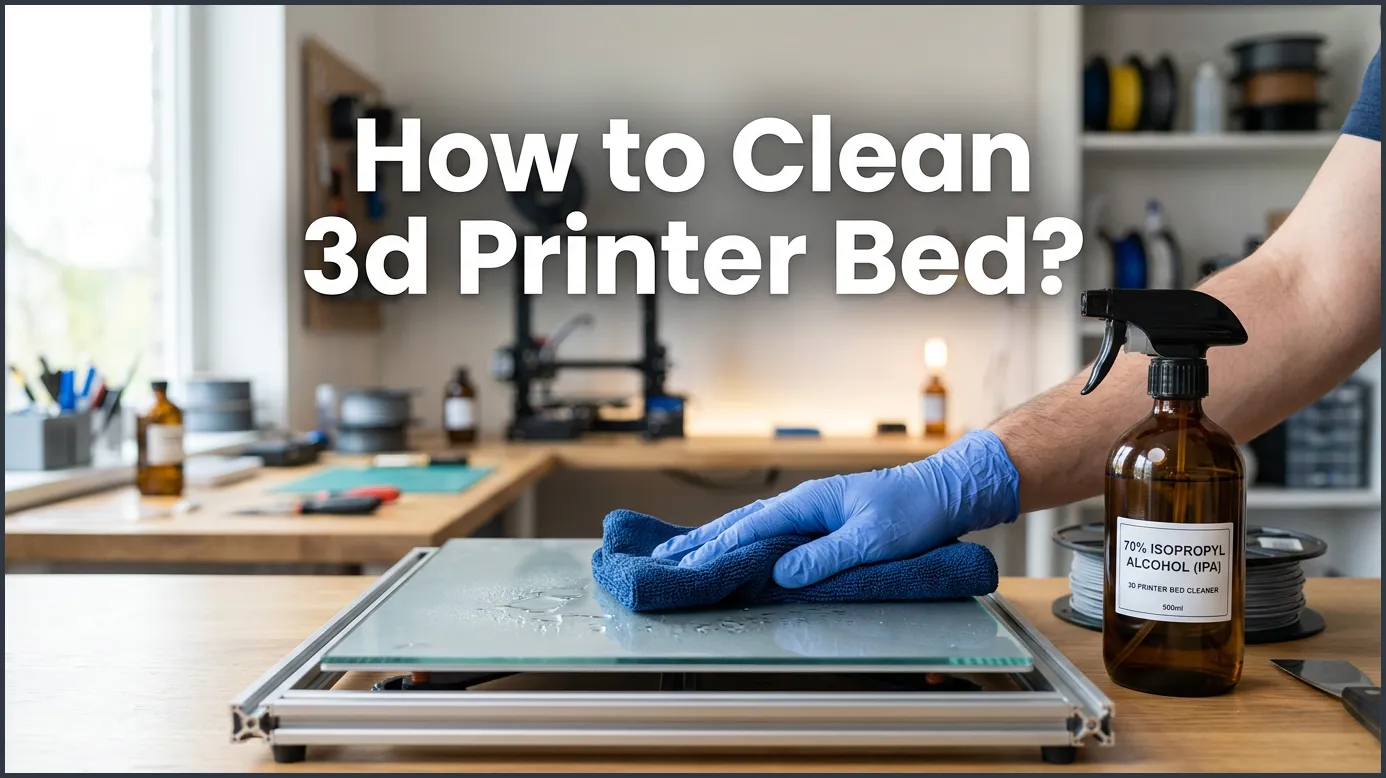
To clean your 3D printer bed properly, wipe it down with 90% or higher Isopropyl Alcohol (IPA) using a microfiber cloth after every few prints. For heavy glue, hairspray, or grease buildup, wash the removable plate in the sink with warm water and mild dish soap. Always let the print bed cool down completely before you begin cleaning to prevent damage or burns.
Imagine this common scene. You spent hours slicing your favorite 3D model. You load the file and press print. The nozzle heats up, and the first lines look perfect. You walk away with a big smile. But when you return, you find a messy ball of melted plastic stuck to your nozzle. Your print failed, and your filament is wasted.
This common problem ruins many prints. You might think your bed level is off. You might think your nozzle temperature is wrong. But often, the real issue is simple dirt. A dirty print surface stops plastic from sticking. That is why learning how to clean 3D printer bed plates is a vital skill for every maker.
In this guide, you will learn how to clean 3D printer bed surfaces step-by-step. We will look at different bed types like glass and PEI. We will also share the best tools to use and what mistakes to avoid. Let’s make your first layers perfect again!
Key Takeaways
- IPA is your best friend: Use 90%+ Isopropyl Alcohol for quick, daily wipes to remove finger oils.
- Dish soap for deep cleans: Warm water and mild dish soap work best to dissolve heavy glue or hairspray buildup.
- Let it cool: Always let your build plate cool completely to prevent glass from cracking or PEI from warping.
- Use microfiber only: Avoid paper towels or rough sponges that can leave lint or scratch the bed surface.
- Avoid harsh chemicals: Do not use glass cleaners with additives or acetone on textured PEI beds.
Quick Answers to Common Questions
Can I use glass cleaner on my 3D printer bed?
No, you should avoid glass cleaners because they often contain silicone or wax. These ingredients leave a thin film that prevents plastic from sticking to the bed.
How often should I clean my build plate?
Wipe your bed with IPA after every three prints to remove finger oils. Perform a deep clean with warm water and dish soap once a week.
Is acetone safe for cleaning PEI sheets?
Acetone is safe for occasional use on smooth PEI to restore it, but you must never use it on textured PEI as it ruins the coating.
Can I use paper towels to clean my print bed?
It is best to avoid paper towels because they can leave tiny fibers behind. Use a high-quality microfiber cloth instead for a lint-free finish.
Why are my prints still not sticking after cleaning?
If your bed is clean but prints still fail, your nozzle may be too far from the bed. Try leveling your bed again and adjusting your Z-offset.
📑 Table of Contents
Why a Clean 3D Printer Bed Matters
The Enemy of First Layers: Finger Oils and Dust
Every time you touch your print bed, you leave invisible oils behind. Your skin has natural oils. These oils act like a shield. They stop the hot plastic from gripping the bed. Dust also settles on your build plate. This dust creates a dry layer between the plastic and the bed. When you know how to clean 3D printer bed surfaces, you remove these hidden enemies. This lets the hot filament bond directly with the plate.
Signs Your Bed Needs a Good Cleaning
How do you know it is time to clean? The most obvious sign is when prints lift at the corners. This is called warping. Another sign is when your purge line does not stick. If you see white powdery spots from old glue, it is also time. A clean bed should look uniform and free of smudges. If you see shiny spots where your fingers touched, grab your cleaning supplies.
The Best Tools and Cleaning Solutions
Isopropyl Alcohol (IPA)
IPA is the ultimate tool for 3D printer care. It dissolves oils quickly. It also dries in seconds. For best results, use IPA that is 90% pure or higher. Lower percentages have too much water. Water takes too long to dry and can leave spots. IPA is perfect for quick wipes between prints. Just keep a spray bottle near your printer.
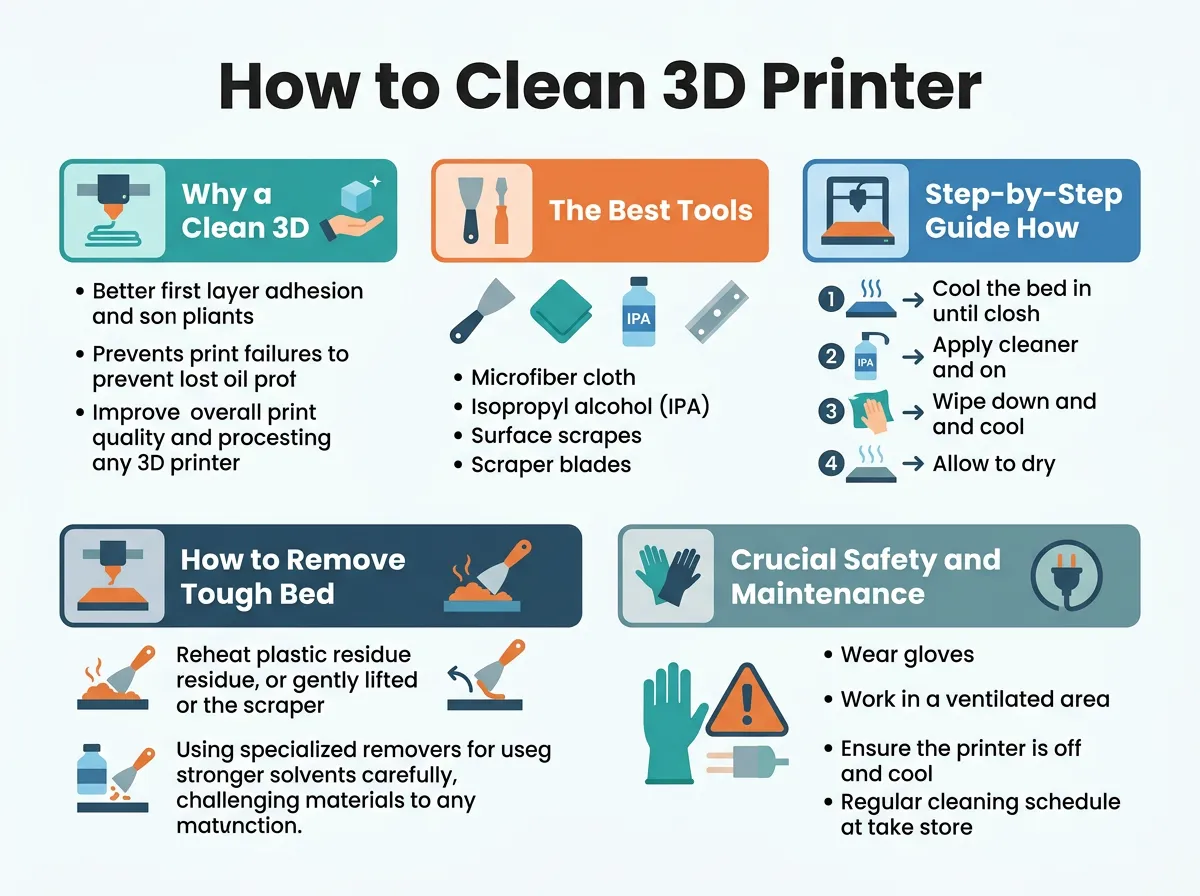
How to Clean 3D Printer Bed? — key points at a glance
Dish Soap and Warm Water
Sometimes, IPA is not enough. IPA can smear some glues around instead of removing them. That is when you need simple dish soap. Good dish soap breaks down oils and dissolves glue. Always use a mild soap without moisturizers. Moisturizers leave a greasy film. This film will ruin your next print.
Scrapers and Microfiber Cloths
Always use a soft microfiber cloth. Paper towels can leave tiny paper fibers behind. For stuck plastic, use a plastic scraper. Metal scrapers can scratch your bed easily. Scratches will ruin your bed over time. A plastic scraper is cheap and keeps your bed safe.
Step-by-Step Guide: How to Clean 3D Printer Bed Materials
Cleaning Glass Build Plates
Glass beds are popular because they are very flat. But they need constant care. To start, let the glass cool down completely. Sudden temperature shifts can crack glass. Spray some IPA on a cool microfiber cloth. Wipe the glass in circular motions. For thick glue, remove the glass plate from the printer. Wash it in your sink with warm water and dish soap. Rinse it well and dry it with a lint-free towel.
Cleaning PEI Sheets (Smooth and Textured)
PEI sheets grip plastic very well when hot. But they hate finger oils. To clean smooth PEI, wipe it with 91% IPA. Do this when the bed is cool. For textured PEI, use a soft toothbrush with dish soap and warm water. The brush bristles get into the tiny bumps. This removes stuck plastic bits easily. Never use acetone on textured PEI. It can damage the coating permanently.
Cleaning Painter’s Tape and Magnetic Beds
Some makers use blue painter’s tape. You cannot clean tape with water. Water will ruin the adhesive and peel the tape. Instead, wipe tape gently with a dry cloth. If the tape is too dirty, just peel it off. Apply a fresh layer of tape. For magnetic sheets, use IPA on a cloth. Do not soak magnetic beds in water. Water can rust the magnet underneath over time.
How to Remove Tough Adhesives
Dissolving Glue Stick Residue
Many people use glue sticks to help prints stick. Over time, this glue builds up. It makes the bed bumpy and uneven. To clean this, warm water is your best tool. Glue stick glue is water-soluble. Wipe the bed with a damp, warm cloth. The glue will soften and wipe away easily. You do not need harsh chemicals for this task.
Tackling Sticky Hairspray Buildup
Hairspray is great for adhesion, but it gets everywhere. It leaves a sticky mist on your printer frame and belts. To clean hairspray, remove the build plate first. If you clean it inside the printer, you might get spray on the moving parts. Wash the plate in the sink with soapy water. Use a non-scratch sponge to scrub the surface gently. Rinse with warm water and dry thoroughly.
Crucial Safety and Maintenance Tips to Prevent Damage
Let the Bed Cool Down First
Never clean a hot bed. This is a vital rule when learning how to clean 3D printer bed plates. Hot beds can burn your fingers. Also, cold liquids on hot glass can shatter it. Hot PEI can warp if you put cold water on it. Always wait ten minutes after a print ends. Let the temperature drop to room level.
Avoid Harsh Chemicals
Avoid harsh chemical cleaners. Glass cleaners often have wax or silicone. These ingredients make things shiny, but they ruin print adhesion. Also, keep acetone away from most beds. It can melt plastic parts and destroy PEI sheets. Stick to IPA and simple dish soap to stay safe.
How Often Should You Clean?
You do not need a deep clean every day. Wipe your bed with IPA after every three prints. Do a deep wash with soap and water once a week. This simple routine keeps your prints sticking perfectly. It also extends the life of your build plate.
Conclusion
Keeping your print bed clean is the secret to great 3D prints. It saves you time, filament, and frustration. Now you know how to clean 3D printer bed surfaces like a pro. With just some IPA, dish soap, and a microfiber cloth, you can keep your printer running smoothly. Clean your bed today and enjoy perfect first layers on your next project!
Frequently Asked Questions
What is the best alcohol to clean a 3D printer bed?
The best alcohol to use is Isopropyl Alcohol (IPA) with a purity of 90% or higher. Lower purity alcohol contains too much water, which can leave wet spots and streaks on your build plate.
Can I clean my print bed while it is still hot?
No, you should always wait for the print bed to cool down to room temperature. Cleaning a hot bed can cause glass to crack, warp your build plate, or cause painful skin burns.
How do I remove stuck plastic from my build plate?
You can remove stubborn plastic by heating the bed to 60 degrees Celsius and gently lifting the plastic with a plastic scraper. Avoid using metal scrapers because they will scratch and ruin the surface of your bed.
Does dish soap damage PEI sheets?
No, mild dish soap is completely safe for PEI sheets and is highly recommended for deep cleaning. Just make sure the dish soap does not contain added moisturizers, which can leave a greasy residue.
Why does my 3D printer bed get dirty so quickly?
Your bed gets dirty from dust in the air, leftover plastic bits, and oils from your fingers when you remove prints. Making it a habit to only touch the edges of the build plate will help keep it clean longer.
Can I use steel wool to scrub my glass bed?
Do not use steel wool because it can create micro-scratches on the glass surface. These scratches will make your prints stick too well, which makes them very hard to remove without breaking the glass.
