



A raft is a flat, supportive structure designed to provide flotation on water or stability on land and in manufacturing. Most commonly, it refers to a simple boat without a hull, but it also describes a heavy concrete foundation used in construction and a temporary plastic base used in 3D printing. In all cases, a raft serves as a secure, flat platform that keeps other objects from sinking, sliding, or failing.
Imagine standing on the bank of a swift, rushing river. You need to cross to the other side, but the water is too deep to wade through. Your eyes scan the shoreline. You spot fallen tree logs, thick vines, and sturdy branches. With a bit of work, you tie them together to build a simple floating platform. You have just created one of the oldest and most reliable tools in human history.
While most of us think of river adventures when we hear the word, the term actually spans several different industries. You might hear a builder talk about pouring a raft in a muddy backyard. Or, you might hear a tech enthusiast mention a raft when starting a high-tech project. It is a word with a rich history and many modern uses.
So, what lies behind this simple term? In this guide, we will explore the three main types of rafts. We will look at how they work, why people use them, and some handy tips for each one. Let us dive in and learn more about these versatile structures.
Key Takeaways
- Watercraft Basics: A traditional water raft is a flat vessel without a hull, relying on buoyant materials to float.
- 3D Printing Support: In additive manufacturing, a raft is a disposable plastic base that improves bed adhesion.
- Construction Strength: A raft foundation is a thick slab of concrete that spreads a building’s weight over soft soil.
- History and Progress: Rafts have evolved from simple wooden logs tied together to advanced synthetic materials.
- Safety and Success: Choosing the right kind of raft ensures safety on wild rivers and success in building projects.
Quick Answers to Common Questions
What is the main difference between a boat and a raft?
A boat typically has a hollow hull that displaces water, while a raft is a flat structure without a hull that floats on the water’s surface.
Can you reuse a 3D printing raft?
No, a 3D printing raft is a temporary plastic support that must be peeled off and discarded after the print is finished.
Is a raft foundation suitable for all soil types?
It is ideal for soft or uneven soils because it spreads the building’s weight, but it may not be necessary for highly stable, solid bedrock.
What are modern river rafts made of?
Modern river rafts are made of highly durable, puncture-resistant synthetic materials like PVC or heavy-duty polyurethane fabrics.
Do raft foundations require deep digging?
No, they require much shallower excavation compared to traditional deep foundations, which saves time and labor costs.
📑 Table of Contents
The Classic Water Vessel
For thousands of years, humans have used rafts to travel, trade, and survive. A traditional raft is any flat structure that floats on water. Unlike a standard boat, it does not have a hollow hull or enclosed sides. Instead, it relies on the natural buoyancy of its materials to stay afloat. The water flows right beneath, and sometimes over, the flat surface.
Early people made these vessels from whatever they could find. They used bamboo, balsa wood, reeds, or inflated animal skins. These simple tools allowed early explorers to cross wide rivers and travel along coastal waters. Today, we still use water rafts, but they look quite different from those ancient wooden platforms.
Modern Inflatable Rafts
If you go river rafting today, you will likely step onto an inflatable model. Modern inflatable rafts are made from tough, synthetic fabrics like PVC or polyurethane. These materials resist punctures from sharp rocks and scrapes from riverbeds. They contain multiple air chambers. If one chamber gets a tear, the others stay inflated to keep you safe and dry.
Whitewater and Recreation
Whitewater rafting is a popular outdoor sport. Teams of paddlers work together to navigate wild river rapids. These rafts are designed to bend and flex with the waves. They also have self-bailing floors. This means any water that splashes into the boat quickly drains out through holes along the edges. It keeps the raft light and easy to steer.
Rafts in the World of 3D Printing
Let us step away from the river and enter the world of modern technology. If you own a 3D printer, you have probably run into the term “raft” on your computer screen. In this field, the word describes a temporary plastic platform printed directly onto the build plate.
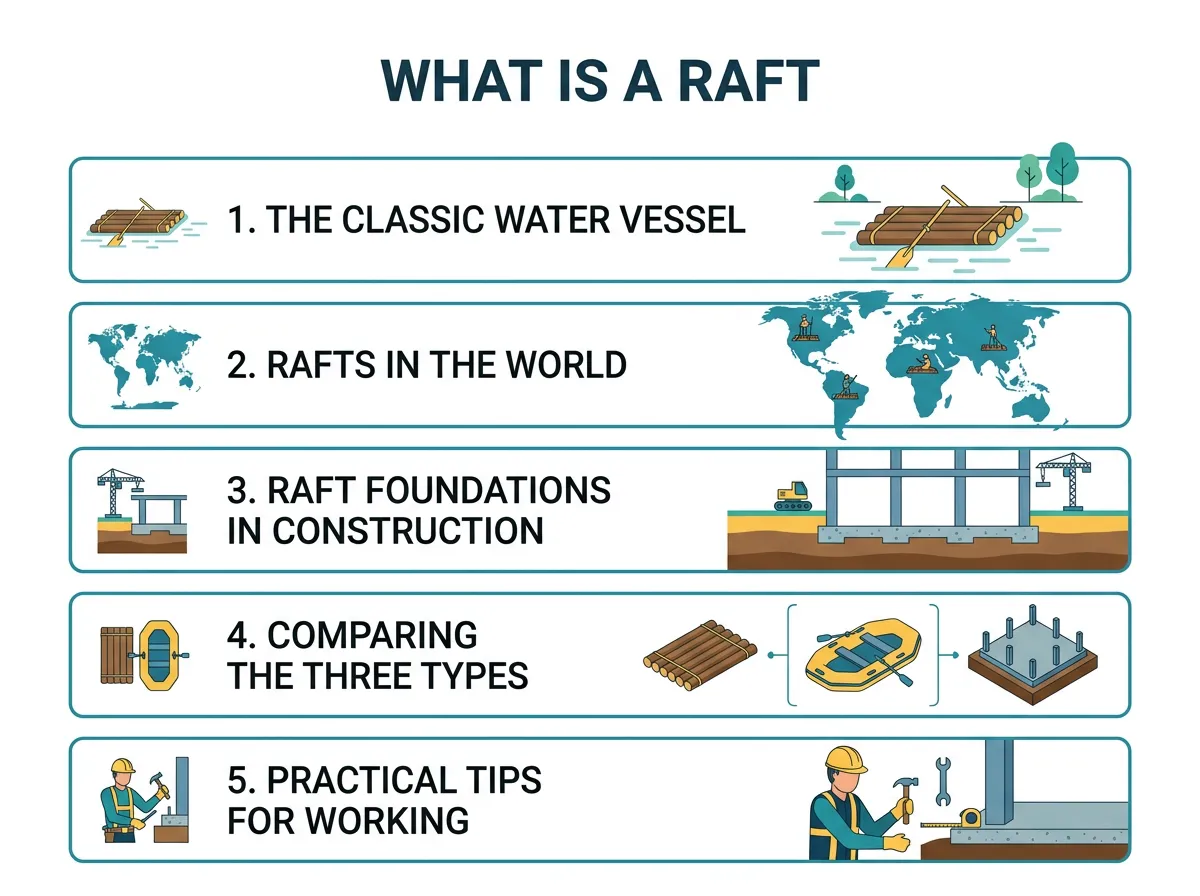
What Is a Raft? — key points at a glance
When you start a 3D print, the first layer of plastic must stick firmly to the bed. If it curls or slips, the entire print can fail. To prevent this, many makers use rafts, skirts, and brims to help secure their projects. A 3D printing raft acts as a thick, disposable mat. The printer builds this mat first, and then it prints your actual model on top of it.
Why Use a 3D Printing Raft?
Using a raft helps solve several common printing issues. First, it cures bad bed adhesion. If your printer bed is slightly uneven, the raft absorbs those tiny errors. Second, it prevents warping. Certain plastics shrink as they cool, which makes the corners of your model lift up. The raft holds the edges down tight. Once the print finishes, you simply peel the raft off and throw it away.
When to Avoid Them
While rafts are highly useful, you do not always need them. They use extra plastic filament, which can lead to waste. They also add extra time to your print job. Sometimes, removing the raft can leave a rough texture on the bottom of your finished model. For simple prints with wide, flat bases, a clean print bed is usually enough.
Raft Foundations in Construction
Now, let us look down at the ground beneath our feet. In the construction industry, a raft has nothing to do with water or plastic. Instead, it is a massive engineering solution used to support heavy buildings on soft ground.
In construction, a raft foundation is a thick, reinforced concrete slab that covers the entire footprint of a building. It acts like a giant snowshoe. Instead of sending the weight of the house down into deep, narrow pillars, the raft spreads the load evenly across the entire surface of the soil. This prevents the building from sinking or cracking over time.
Ideal Soil Conditions
Builders often choose this method when dealing with soft clay, loose sand, or marshy ground. It is also highly useful when the soil has weak spots. By spreading the weight over a wide area, the structure can sit safely on top of the ground without shifting. When planning a project, learning about safety rules and raft foundations is essential for a long-lasting build.
Benefits of a Raft Foundation
These foundations are often faster and cheaper to install than deep basement foundations. They require less digging, which saves time and labor. They also provide a built-in floor base for the ground level of the home. This makes them a popular choice for modern housing developments and small commercial structures.
Comparing the Three Types of Rafts
It is fascinating to see how one word can describe three completely different things. Let us compare them side-by-side to see how their core purposes align.
Purpose and Use Cases
A water raft keeps people and gear floating safely on top of water. A 3D printing raft keeps plastic models securely attached to a warm metal print bed. A construction raft keeps a heavy brick-and-mortar home stable on top of soft soil. In every case, the main goal is to provide a reliable, flat support system.
Materials and Lifespan
Water rafts are built for durability and long-term reuse. They must withstand UV rays, rocks, and constant moisture. Construction rafts are permanent. They are made from steel-reinforced concrete and are built to last for generations. On the other hand, 3D printing rafts are completely temporary. They exist for just a few hours before being peeled off and recycled.
Practical Tips for Working with Rafts
No matter which type of raft you are dealing with, a few basic tips can make your experience much smoother. Here are some simple guidelines to help you out.
For Water Rafting Adventures
- Always Wear a Life Jacket: Even the most stable raft can flip in rough waters. A personal flotation device is non-negotiable.
- Pack a Patch Kit: If you are using an inflatable model, always carry a small repair kit. A quick patch can save your trip.
- Distribute Weight Evenly: Keep heavy gear in the center of the raft to maintain balance and easy steering.
For 3D Printing Projects
- Check Your Bed Temperature: Make sure your print bed is hot enough to help the raft stick without curling.
- Adjust the Air Gap: Set a small space between the raft and your model. This makes the raft much easier to peel off later.
- Keep Your Filament Dry: Wet filament can cause the raft to bubble, which ruins the foundation of your print.
For Construction and Home Building
- Test the Soil First: Always hire a professional soil engineer to test the ground before choosing a foundation type.
- Ensure Proper Drainage: Water should always flow away from a concrete slab to prevent soil erosion around the edges.
- Use Quality Materials: High-grade concrete and strong steel mesh are key to a crack-free foundation.
Conclusion
The next time someone asks you about a raft, you can share a wealth of knowledge. From floating down a wild river to printing a tiny plastic toy, this simple word covers an incredible range of human ingenuity. At its heart, a raft is all about stability. It is a trusted platform that keeps us safe, supports our creative designs, and holds up the very homes we live in. Understanding how these different systems work helps us appreciate the clever engineering that shapes our daily lives.
Frequently Asked Questions
What is a raft in everyday language?
In everyday language, a raft is a simple, flat floating platform used to travel across water. It is often made of wood, bamboo, or inflatable rubber and does not have a traditional boat hull.
Why does a 3D printer need a raft?
A 3D printer uses a raft to help the plastic model stick firmly to the build plate. It prevents the corners of the print from warping and warping as the plastic cools down.
When should a builder choose a raft foundation?
A builder should choose a raft foundation when the construction site has soft clay, loose sand, or highly compressible soil. This design spreads the weight of the structure evenly to prevent sinking and cracking.
How safe are inflatable rafts for river trips?
Modern inflatable rafts are incredibly safe because they are made from tough, multi-layered synthetic fabrics. They also feature separate air chambers, so the raft will stay afloat even if one chamber gets punctured.
What is the air gap on a 3D printed raft?
The air gap is the tiny vertical space between the top of the raft and the bottom layer of your actual printed model. Adjusting this gap makes it much easier to peel the disposable raft away once the print is complete.
How thick is a typical concrete raft foundation?
A typical concrete raft foundation is usually between 150 millimeters and 300 millimeters thick for standard residential homes. The exact thickness depends on the weight of the building and the soft nature of the soil beneath it.
