


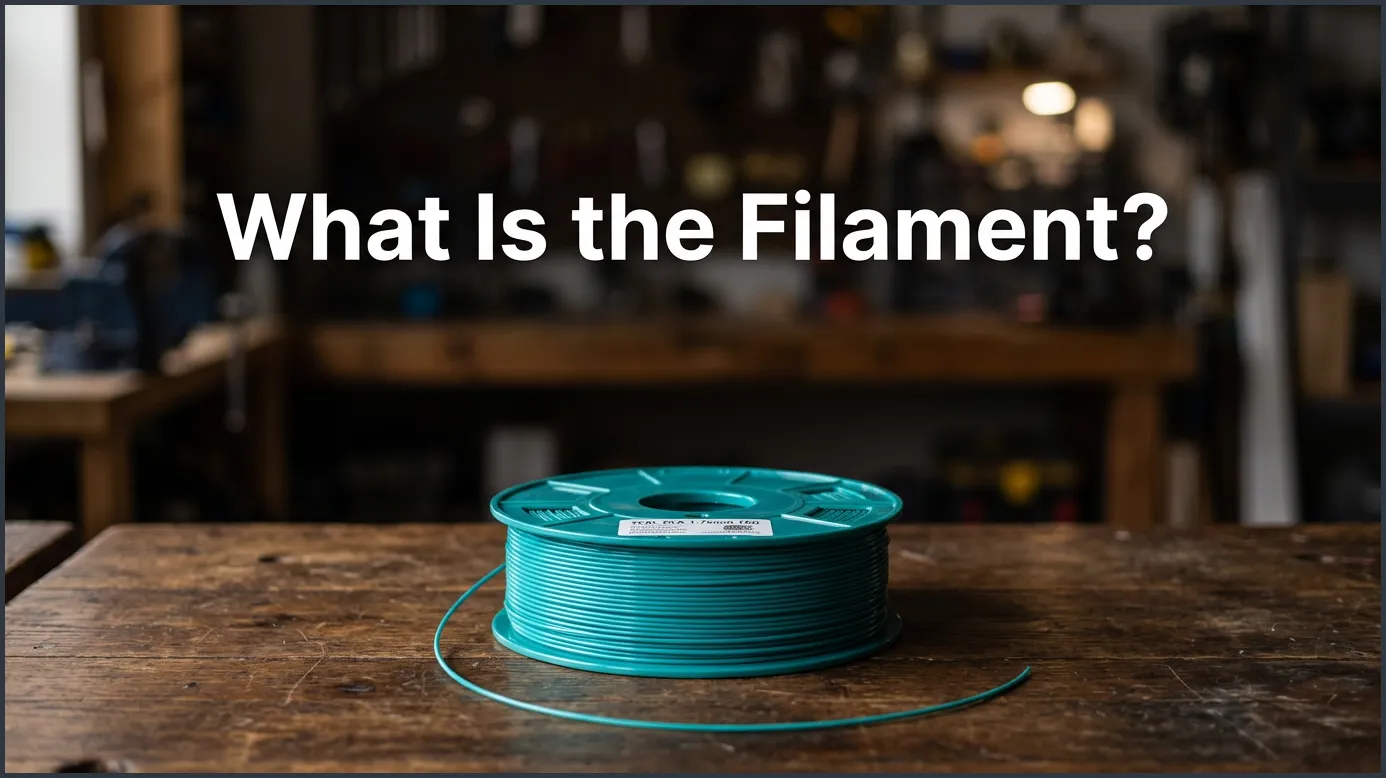
A filament is a fine, thread-like object or fiber found in various fields of science, technology, and nature. From the glowing wire inside an old light bulb to the plastic spool fed into a 3D printer, the term describes a long, thin structure. It even refers to massive, web-like gas clouds stretching across the universe.
Have you ever stopped to look closely at a glowing light bulb? Or maybe you have watched a 3D printer build a toy, layer by layer, from a spool of colorful plastic. In both cases, a very simple yet amazing thing is at work. It is a tiny, thin thread that makes these modern wonders possible.
When we hear the word “filament,” we might think of just one thing. But this word actually connects many different worlds. It links the small parts of our cells to the vast, open spaces of the night sky. It is a concept that is both simple and deep.
If you have ever asked yourself, What Is the Filament?, you are in the right place. In this guide, we will explore the many faces of this humble thread. We will look at how it lights our homes, powers our printers, keeps our bodies moving, and even holds the stars together.
Key Takeaways
- Diverse Definition: A filament is any thin, thread-like structure, spanning physics, biology, and printing.
- 3D Printing Star: In modern manufacturing, filament is the plastic thread melted to build physical 3D objects.
- Lighting History: Traditional incandescent light bulbs rely on a thin tungsten filament that glows when heated.
- Biological Role: Our bodies contain tiny cellular filaments that give our cells shape and help our muscles contract.
- Cosmic Scale: The largest known structures in the universe are massive filaments of dark matter and galaxies.
- Proper Care: Keeping 3D printing filament dry is essential for successful projects and high-quality prints.
Quick Answers to Common Questions
What is 3D printer filament made of?
3D printer filament is most commonly made from thermoplastics like PLA, ABS, and PETG, which melt when heated and harden when cooled.
Why did light bulbs use tungsten filaments?
Tungsten has an incredibly high melting point, allowing the filament to glow white-hot without melting or breaking.
What are galaxy filaments?
Galaxy filaments are massive, thread-like structures made of dark matter and galaxies that form the large-scale web of the universe.
Can wet 3D printing filament be saved?
Yes, you can save wet filament by drying it in a specialized filament dryer or a food dehydrator at a low temperature for several hours.
What is a filament in a flower?
In a flower, the filament is the slender stalk that supports the anther, which is the pollen-producing part of the plant.
📑 Table of Contents
Answering the Question: What Is the Filament?
Let us start with the basics. What does this word actually mean? If you look at the roots of the word, it comes from the Latin word for thread. It is a shape more than a specific material.
A Thread of Many Meanings
In simple terms, a filament is a very thin, thread-like object. It can be made of metal, plastic, plant tissue, or even glass. According to the Merriam-Webster dictionary definition of filament, it is a very fine thread or threadlike object. Think of a long, thin strand of hair. That is a kind of filament. The term is used across many fields, as seen on the Wikipedia page for filament, which lists its uses in physics, space, and nature.
Because the word is so broad, it pops up in many science labs and hobby shops. No matter where you find it, it always refers to something long, thin, and full of purpose. It is a shape that nature and humans use to solve problems.
The Filament in 3D Printing
Today, most people hear this word and think of 3D printing. This is one of the most exciting uses of the term in our modern world.
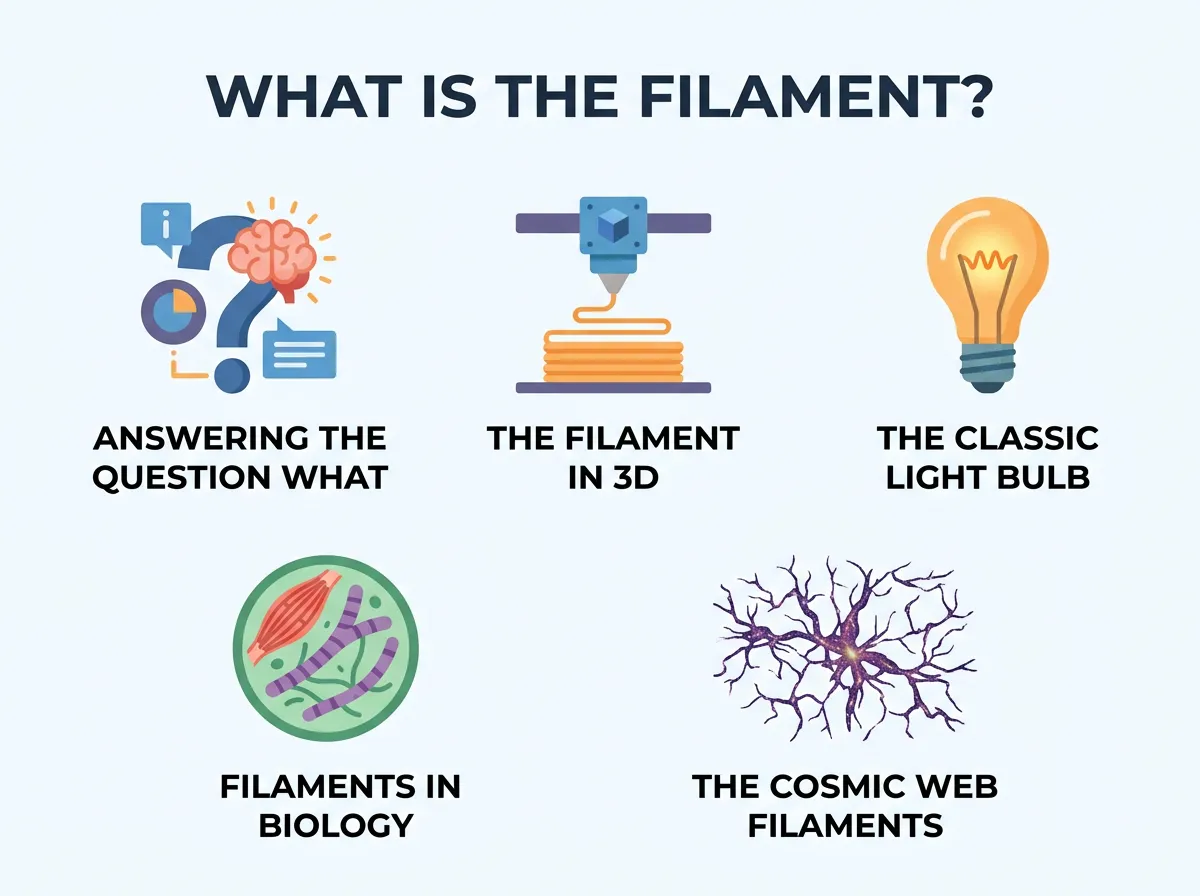
What Is the Filament? — key points at a glance
Feeding the Creative Machine
In the world of 3D printing, filament is the fuel. It is a long, thin plastic wire wrapped tightly around a spool. The printer pulls this wire into a hot nozzle. The nozzle melts the plastic. Then, the printer draws a thin line of melted plastic onto a bed. Layer by layer, this plastic cools down and hardens. Soon, you have a solid 3D object.
For a deep dive into advanced manufacturing, you can learn about how filament is used in production to create strong parts. Without this thin plastic thread, 3D printing as we know it would not exist. It allows people to turn digital designs into real objects at home.
Popular Types of 3D Printing Filament
There are many types of plastic used in 3D printing. Each type has its own special traits:
- PLA (Polylactic Acid): This is the most popular choice. It is made from cornstarch, so it is safe and easy to use. It smells sweet when it melts and comes in many bright colors.
- ABS (Acrylonitrile Butadiene Styrene): This is a very strong plastic. Toy bricks are made of ABS. It can handle high heat, but it smells bad when printed and can warp easily.
- PETG (Polyethylene Terephthalate Glycol): This is a great middle-ground plastic. It is strong like ABS but easy to print like PLA. It is often used for water bottles.
- TPU (Thermoplastic Polyurethane): This plastic is flexible. You can use it to print phone cases, rubber tires, or bendy toys.
The Classic Light Bulb Filament
Before 3D printers, the word filament made people think of light. This is the classic use that changed human history. It brought light into our homes at night.
How Tungsten Lights the Dark
Inside a traditional light bulb, there is a tiny, looped wire. This is the filament. It is usually made of a metal called tungsten. Tungsten is used because it has a very high melting point. It can get incredibly hot without turning into liquid.
When you flip a light switch, electricity rushes through this wire. The wire fights the flow of electricity. This fight creates friction, which makes the wire extremely hot. It gets so hot that it starts to glow brightly. This process is called incandescence. The glass bulb is filled with a special gas so the wire does not catch fire and burn up.
Why the Old Bulb Is Fading Away
While beautiful, these bulbs are not very smart. They waste a lot of energy. Only a small amount of the electricity turns into light. The rest turns into heat. This is why old bulbs get so hot to the touch. Today, we use LED lights. They do not use a heated wire, so they save a lot of energy and last much longer.
Filaments in Biology and Nature
Nature was using filaments long before humans ever made a light bulb or a 3D printer. Life itself relies on these tiny structures to function properly.
The Building Blocks of Life
Inside your own body, there are millions of tiny filaments. They are found inside your cells. These are called microfilaments. They act like a tiny skeleton for each cell. They give the cell its shape and help it move. Without them, our cells would collapse.
These threads also help you move your arms and legs. Your muscles contain two main types of protein filaments: actin and myosin. When you want to move a muscle, these tiny threads slide past each other. This action pulls the muscle tight, allowing you to walk, run, and lift things.
Fungal and Plant Filaments
If you look at a mushroom, you are looking at a web of filaments. Mushrooms grow from a network of tiny threads underground. These threads are called hyphae. They spread through the soil to find water and food. In plants, the word has another meaning. In a flower, the filament is the thin stalk that holds up the anther, which produces pollen.
The Cosmic Web: Filaments in Space
Now, let us think big. Let us look up at the night sky. Space is mostly empty, but it is not completely empty. There is a pattern to the universe.
The Largest Structures in the Universe
On a cosmic scale, astronomers use the word filament to describe something truly massive. These are called galaxy filaments. They are giant, thread-like structures made of gas, stars, and dark matter.
These cosmic threads form a massive web across space. Where the threads cross, huge groups of galaxies form. These structures are so large that they are hard to imagine. A single cosmic filament can be millions of light-years long. They are the scaffolding of the universe, holding everything together in a giant cosmic web.
Practical Tips for Choosing and Using Filaments
If you are a hobbyist working with 3D printing, here are some quick, practical tips to help you get the best results from your materials.
Keep Your Materials Dry
Plastic filaments love water. They will absorb moisture from the air around them. This is called being hygroscopic. If your plastic gets wet, your prints will look messy. You might hear popping sounds when printing. Always store your plastic rolls in airtight bags with silicone gel packs to keep them dry.
Find the Right Temperature
Every plastic melts at a different heat level. If your nozzle is too cold, the plastic will not flow. If it is too hot, it will ooze and leave messy strings on your print. Always check the label on your spool for the best temperature settings. Start printing a test model to find the sweet spot.
Conclusion
From the tiny protein threads in our muscles to the giant webs of gas in deep space, the word filament covers a lot of ground. It is a simple shape with endless uses. Whether it is lighting up a dark room, building a plastic model, or holding a galaxy together, this tiny thread is a quiet hero of our world.
So, What Is the Filament? It is proof that even the smallest, thinnest things can have a massive impact on our lives and the universe. Next time you see a 3D printer or a starry sky, remember the power of the humble thread.
Frequently Asked Questions
Is PLA filament biodegradable?
PLA filament is made from natural resources like cornstarch, making it biodegradable under specific industrial composting conditions. It will not easily degrade in a backyard compost pile, but it is much more eco-friendly than traditional petroleum-based plastics.
How does an LED light differ from a filament bulb?
LED lights use semiconductors to produce light, which uses very little energy and creates almost no heat. Traditional filament bulbs rely on heating a tungsten wire until it glows, which wastes a lot of energy as heat.
Why does my 3D printer filament keep snapping?
Filament often snaps because it has absorbed too much moisture from the air, making it brittle. You can fix this by drying the roll in a food dehydrator or a dedicated filament oven.
What is the role of filaments in human muscles?
Muscle contraction relies on thin actin and thick myosin filaments sliding past each other. This movement shortens the muscle fibers, allowing your body to generate force and move.
Are carbon fiber filaments real?
Yes, carbon fiber filaments are standard 3D printing plastics like PLA or nylon mixed with tiny carbon fibers. This mix makes the printed parts significantly stiffer and stronger than normal plastics.
How big are cosmic filaments?
Cosmic filaments are the largest known structures in the universe, often stretching between 160 to 260 million light-years in length. They form the boundaries between massive, empty voids in space.
