


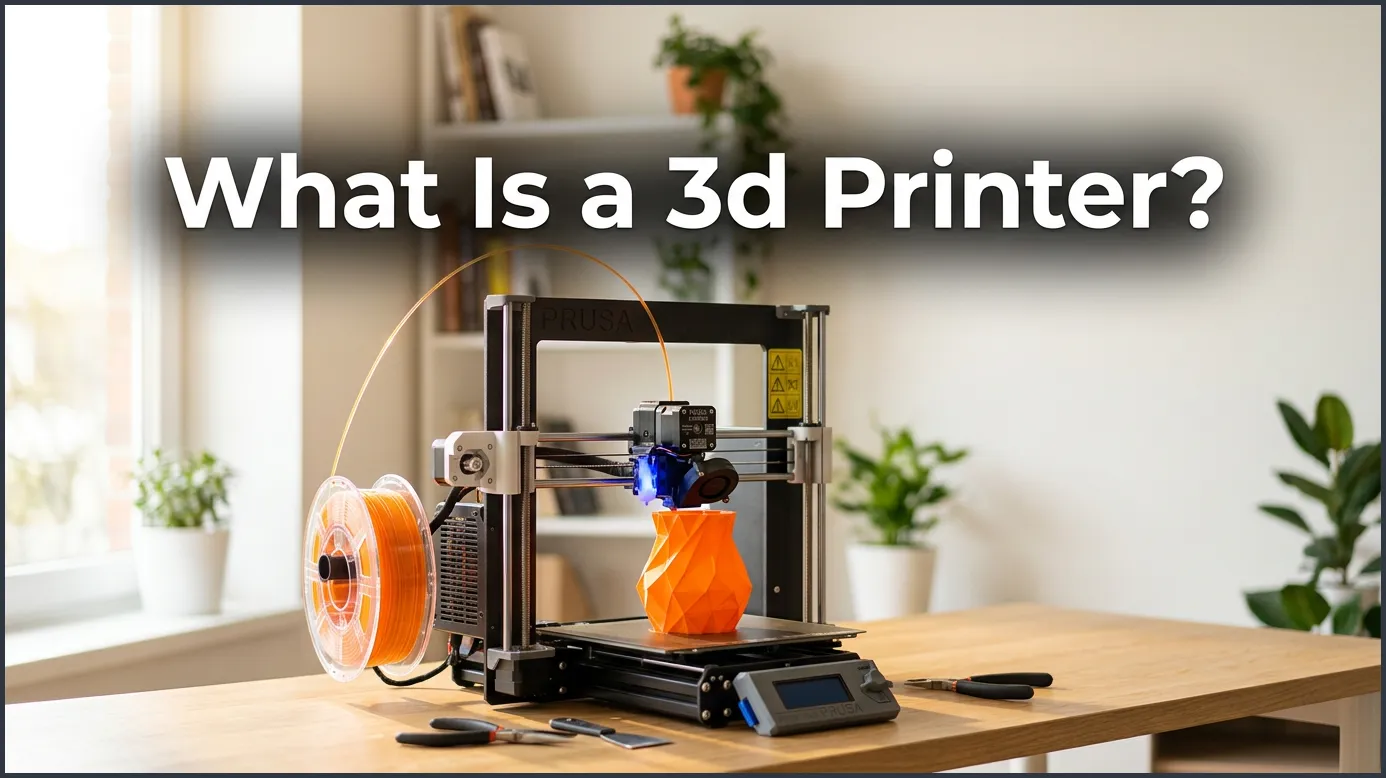
A 3D printer is an innovative machine that builds three-dimensional physical objects layer by layer from a digital design. By heating materials like plastic or resin and placing them with high precision, it brings your digital files to life. Today, this technology is used for everything from fun home crafts to life-saving medical devices.
Imagine having a magic box right on your desk. If you lose a plastic game piece, you do not have to buy a new game. You can just print a new piece in minutes. Want a unique phone case? You can design and make it yourself. This is not science fiction. It is the real-world power of digital fabrication.
For many years, large factories were the only places that could make custom plastic and metal items. Now, that same power sits in schools, offices, and homes. It allows people of all ages to turn their ideas into real, physical items they can hold in their hands.
In this guide, we will explore this amazing technology. We will help you understand the core concepts behind it. We will look at how these machines work, the different types you can buy, the materials they use, and how you can get started with this hobby. Let us dive in!
Key Takeaways
- Additive Manufacturing: Unlike tools that cut material away, 3D printers build items from the ground up, adding one layer at a time.
- Digital Blueprint: Every project begins with a 3D computer model, which is split into thin slices by software.
- Multiple Technologies: The most common types are filament-based (FDM) and liquid resin-based (SLA) systems.
- Diverse Materials: Printers can use various plastics, resins, wood composites, and even metals.
- Real-World Impact: The technology is transforming fields like healthcare, aerospace, school education, and home hobbies.
Quick Answers to Common Questions
What is the most common material used in 3D printing?
The most common material is PLA filament, which is a plant-based plastic that is easy to use and safe for beginners.
How long does it take to print a 3D object?
Print times vary from thirty minutes to several days depending on the size, layer height, and complexity of the object.
Can you make money with a 3D printer?
Yes, many people make money by designing and selling custom items, replacement parts, or decorative figures online and in local shops.
Do you need a computer to use a 3D printer?
Yes, you need a computer to design models or run slicing software to prepare the print files for your machine.
Is 3D printing an expensive hobby?
It has become very affordable, with entry-level home printers starting around two hundred dollars and filament costing about twenty dollars per roll.
📑 Table of Contents
How Does a 3D Printer Actually Work?
Traditional tools often cut away material. Think of a sculptor. They carve wood or stone. They start with a big block. Then, they remove pieces until they get the final shape. This is called subtractive manufacturing. It can create a lot of waste material.
A 3D printer does the exact opposite. It builds things from the ground up. It adds material piece by piece, layer by layer. This is why people call it additive manufacturing. You can read more about this history on Wikipedia’s 3D printing page. When people ask, what is a 3D printer, they are asking about this unique building process. To make a real object, the machine needs to follow three simple steps.
The Digital Blueprint
Every print starts on a computer. You need a digital 3D model of your object. You can design one yourself using Computer-Aided Design (CAD) software. If you do not know how to design, do not worry! You can download free, pre-made designs from many websites online. There are millions of free models available, from toy figures to kitchen tools.
Slicing the Model
Once you have your digital design, you cannot send it straight to the machine. The printer does not understand a solid 3D shape on its own. It needs a map. You use a special program called a slicer. This software cuts your digital model into hundreds or thousands of flat, horizontal layers. The slicer then creates a list of instructions. This list is called G-code. It tells the printer exactly where to move, how fast to go, and how much material to melt.
Building Layer by Layer
Now, the physical work begins. The printer reads the G-code instructions. It heats up its nozzle. Then, it starts laying down material on a flat surface called the build plate. It prints the very first layer. Once that layer is done, the printer moves up a tiny fraction of a millimeter. It prints the next layer right on top of the first one. It repeats this process over and over until the object is complete. To learn more about this physical process, check out this guide on how does a 3d printer work.
The Main Types of 3D Printers
Not all machines build things the same way. They use different methods and materials to make objects. Here are the three most common types you will see today.
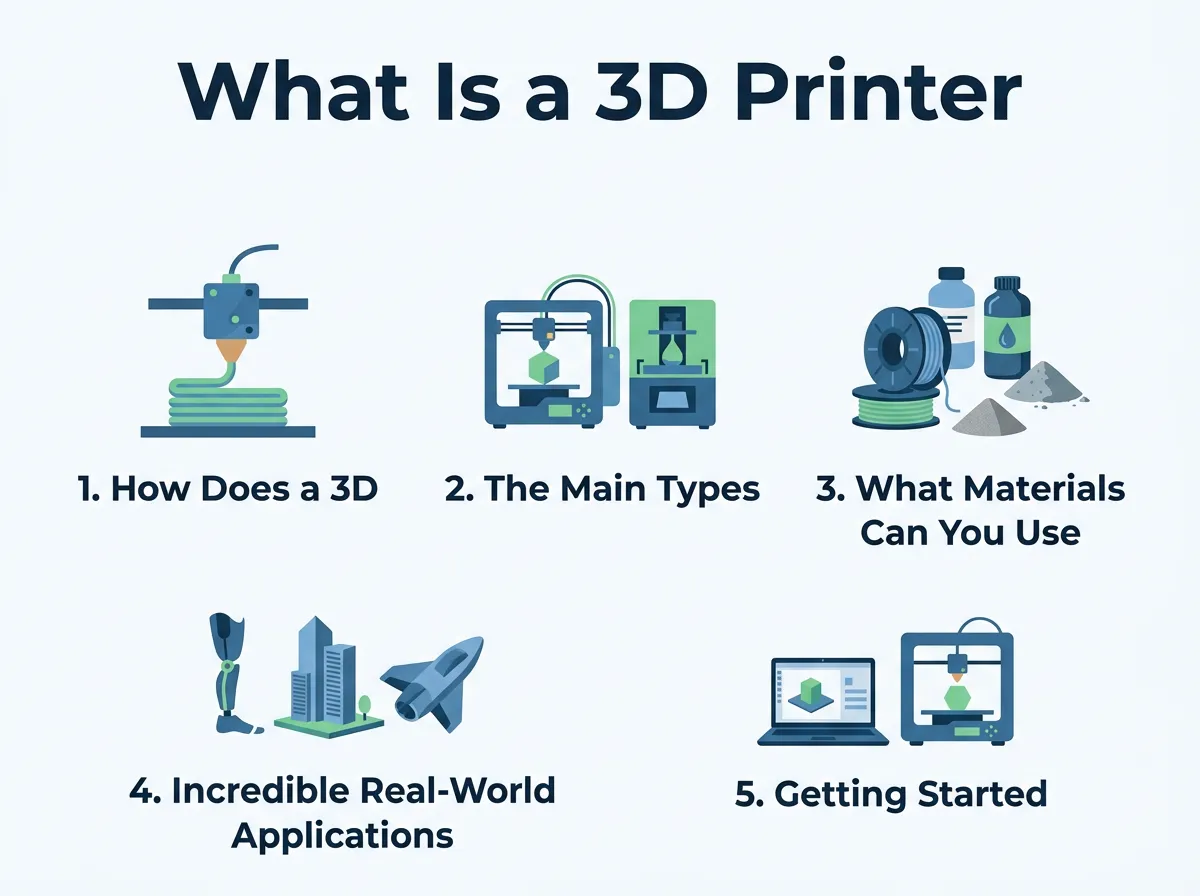
What Is a 3D Printer? — key points at a glance
Fused Deposition Modeling (FDM)
FDM is the most popular type of printer for beginners. It works a lot like a hot glue gun. It uses a spool of plastic wire called filament. The printer pulls the filament into a hot nozzle. The plastic melts. The nozzle moves around, drawing the shape of each layer. The melted plastic cools down and hardens very quickly. These machines are affordable, safe, and easy to use.
Stereolithography (SLA)
SLA printers work differently. They do not use solid plastic wire. Instead, they use a liquid pool of photopolymer resin. This liquid is highly sensitive to light. The printer shines a UV laser or light screen into the liquid. The light cures the resin, turning it into solid plastic. SLA printers can make extremely detailed objects. They are great for small models, jewelry, and dental parts. You can see examples of professional SLA and FDM systems from industry leaders like Formlabs 3D printers.
Selective Laser Sintering (SLS)
SLS is mostly used in factories and workshops. It uses a bed of fine powder, often nylon. A powerful laser heats the powder just enough to fuse the particles together. After one layer is done, a roller spreads a new layer of powder on top. The laser goes to work again. This type of printer is amazing because it does not need extra support structures. The loose powder holds up the printed object while it is being made.
What Materials Can You Use for 3D Printing?
You can print with many different materials. The material you choose depends on your printer type and what you want to make. Here are some of the options.
Plastics
Plastics are the most common materials for FDM printers. Polylactic Acid (PLA) is the easiest material to print. It is made from cornstarch, so it is eco-friendly. It does not smell bad when printing. It is great for toys and decorative items. Acrylonitrile Butadiene Styrene (ABS) is a strong plastic. Legos are made of ABS. It can handle high heat, but it is harder to print. Polyethylene Terephthalate Glycol (PETG) is a mix of PLA and ABS. It is strong, easy to print, and water-resistant.
Liquid Resins
Resins are used in SLA printers. They come in many types. Some resins are tough and durable. Others are flexible like rubber. You can even get clear resins to make see-through objects.
Advanced Materials
Technology is growing fast. Today, you can print with carbon fiber, wood-filled plastics, and even metals. Some specialized printers can even print food like chocolate or sugar!
Incredible Real-World Applications
To truly understand what is a 3D printer, it helps to see how people use them. This technology is changing how we make things around the world.
Healthcare and Medicine
Doctors use these printers to make custom medical devices. They can print exact models of a patient’s organs before surgery. This helps surgeons plan and practice. Doctors also print lightweight, custom prosthetics for patients at a very low cost.
Aerospace and Automotive
Car and airplane makers use this technology to create lightweight parts. Lighter cars and planes use less fuel. This technology also allows them to make complex shapes that are impossible to create with old factory methods.
Education and Prototyping
Many schools use these printers to help students learn. Science classes can print models of molecules or fossils. Engineering students can build prototypes of their designs. If you want to explore how schools and libraries use this technology, take a look at the University of Tennessee 3D printing guide.
Getting Started with Your First Printer
Are you thinking about getting your own machine? It is easier than ever to start. Here are a few simple tips to guide you on your journey.
- Choose the Right Machine: If you are a beginner, buy an FDM printer. They are cheap, safe, and easy to fix. Look for a printer with a large community of users online. This makes it easy to find help if you run into problems.
- Start with PLA Filament: Do not buy complex materials first. Start with PLA plastic. It is very forgiving and prints well on almost any machine. It also does not require a heated build chamber.
- Find a Safe Spot: Put your printer on a sturdy table. Make sure the room has good airflow, especially if you print with materials like ABS. Keep the printer away from drafty windows, as drafts can warp your prints.
- Learn Slicing Basics: Spend some time learning your slicer software. Small settings can make a big difference. Learn how to adjust print speed, layer height, and infill density. Infill is the pattern printed inside your object to make it strong without being solid plastic.
Conclusion
A 3D printer is a gateway to endless creativity. It turns your digital ideas into physical reality. Whether you want to fix household items, build custom models, or learn new engineering skills, this technology offers something for everyone. With prices dropping and software getting simpler, there has never been a better time to start. All it takes is a little curiosity and a desire to build. Who knows what you will print first?
Frequently Asked Questions
Can a 3D printer print metal?
Yes, some specialized industrial printers can build parts using metal powders. These machines use high-powered lasers to melt and fuse the metal together layer by layer.
Is 3D printing safe to do at home?
Yes, it is generally safe if you use safe materials like PLA and keep your room ventilated. You should also be careful because the printer nozzle gets extremely hot during use.
Where can I find free 3D models to print?
There are many free online libraries like Thingiverse and Printables where creators share their designs. You can download these files and slice them for your printer in just a few minutes.
What is a slicer in 3D printing?
A slicer is a computer program that translates your 3D digital model into physical instructions for the printer. It cuts the model into flat layers and generates G-code for the machine to read.
Can you recycle failed 3D prints?
Yes, you can recycle them, but it requires special machine setups to melt the plastic back into filament. Many hobbyists save their failed prints to recycle them once they have the proper gear.
Why do my 3D prints sometimes peel off the bed?
This is called warping, and it happens when the plastic cools too fast and shrinks. You can fix this by using a heated build plate, leveling your bed, or applying a little glue stick to the surface.
