


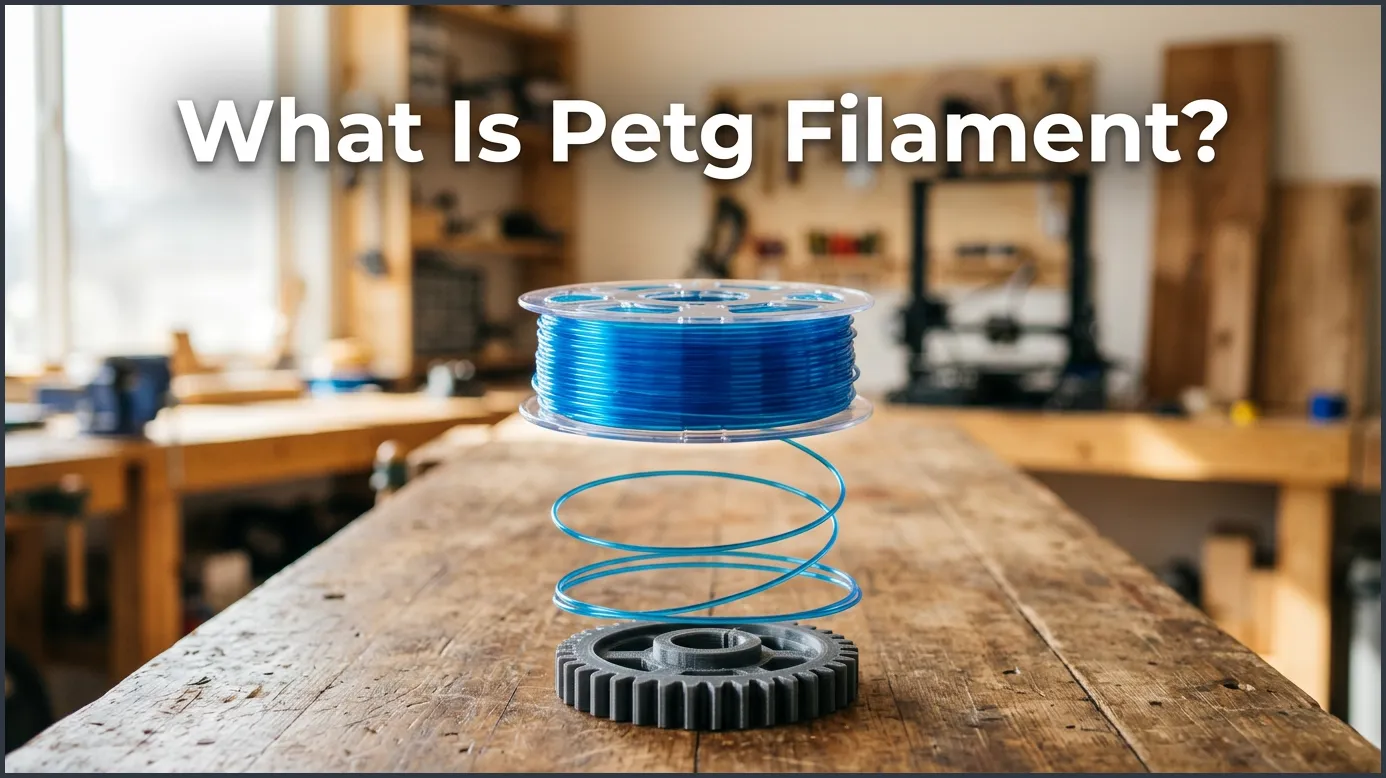
PETG filament is a strong, user-friendly 3D printing material that blends the easy printability of PLA with the high durability of ABS plastic. It is highly resistant to water, chemical damage, and physical impacts, making it ideal for both functional parts and outdoor projects. This versatile thermoplastic has quickly become a go-to choice for makers and professionals alike.
Imagine you want to print a bracket for your garden. Or maybe you need a tough cup holder for your car. You load up your 3D printer with standard PLA filament. The print looks great at first. But then, it melts and warps in the hot sun. Next, you try ABS filament. It warps, smells bad, and cracks before the print can even finish. This is a very common headache for makers. You want a material that is tough but also easy to print.
Fortunately, there is a perfect middle ground. You do not have to settle for weak prints or difficult materials. There is a plastic that solves both of these problems. It has become one of the most loved choices in the 3D printing world. This guide will help you understand this amazing plastic. We will look at its benefits, how to print it, and how it can upgrade your projects.
Key Takeaways
- Perfect Blend: It offers the strength of ABS with the ease of use of PLA.
- High Durability: Highly resistant to impacts, weather, and chemicals.
- Heat Tolerance: It can withstand temperatures up to 80°C without melting.
- Sticky Nature: Sticks very well to glass, so always use a release agent on your print bed.
- Moisture Risk: It absorbs water quickly and must be stored in a dry box.
- Stringing Tendency: Prone to stringing, but this can be fixed with the right retraction settings.
Quick Answers to Common Questions
Is PETG filament food safe?
Many types of PETG are safe for food contact, but you must check the maker’s label first. Also, 3D printed parts have tiny cracks that can trap harmful bacteria over time.
Does PETG filament need an enclosed printer?
No, you do not need an enclosure to print PETG successfully. It prints very well on open-frame 3D printers because it does not warp easily.
How do you stop PETG from stringing?
You can stop stringing by drying your filament and tuning your retraction settings. Lowering your print temperature slightly and reducing your travel speed will also help.
Can you print PETG on glass?
Yes, but you must apply a glue stick or hairspray first. If you do not use this barrier, the plastic can stick too well and break your glass bed.
Is PETG filament biodegradable?
No, PETG is not biodegradable and will not break down in nature. However, it is highly recyclable and can be processed into new products easily.
📑 Table of Contents
The Chemistry of PETG (Made Simple)
What is this plastic made of? To answer the question, what is PETG filament, we must look at its full name. PETG stands for Polyethylene Terephthalate Glycol-modified. That is a very long and scary name. Let us break it down into simple parts so you can see why it works so well.
What Does PET Stand For?
You already know PET very well. It is the most common plastic in the world. Your water bottles and clear food containers are made of PET. It is strong, safe, and light. But raw PET is hard to use for 3D printing. It crystallizes when it cools down. This makes it cloudy and very brittle. It would clog your printer nozzle and break easily.
Why the “G” Matters
That is why chemical makers add glycol to the plastic. The “G” in PETG stands for Glycol. This small change stops the plastic from getting brittle. It makes the plastic clear and easy to melt. It also makes it much tougher. The result is a perfect material for 3D printer nozzles. It flows smoothly and cools down without getting weak.
Why Choose PETG Filament? (The Pros)
Why is PETG filament so popular today? It has many amazing traits. Here are the main reasons why you should use it for your next 3D printing project.
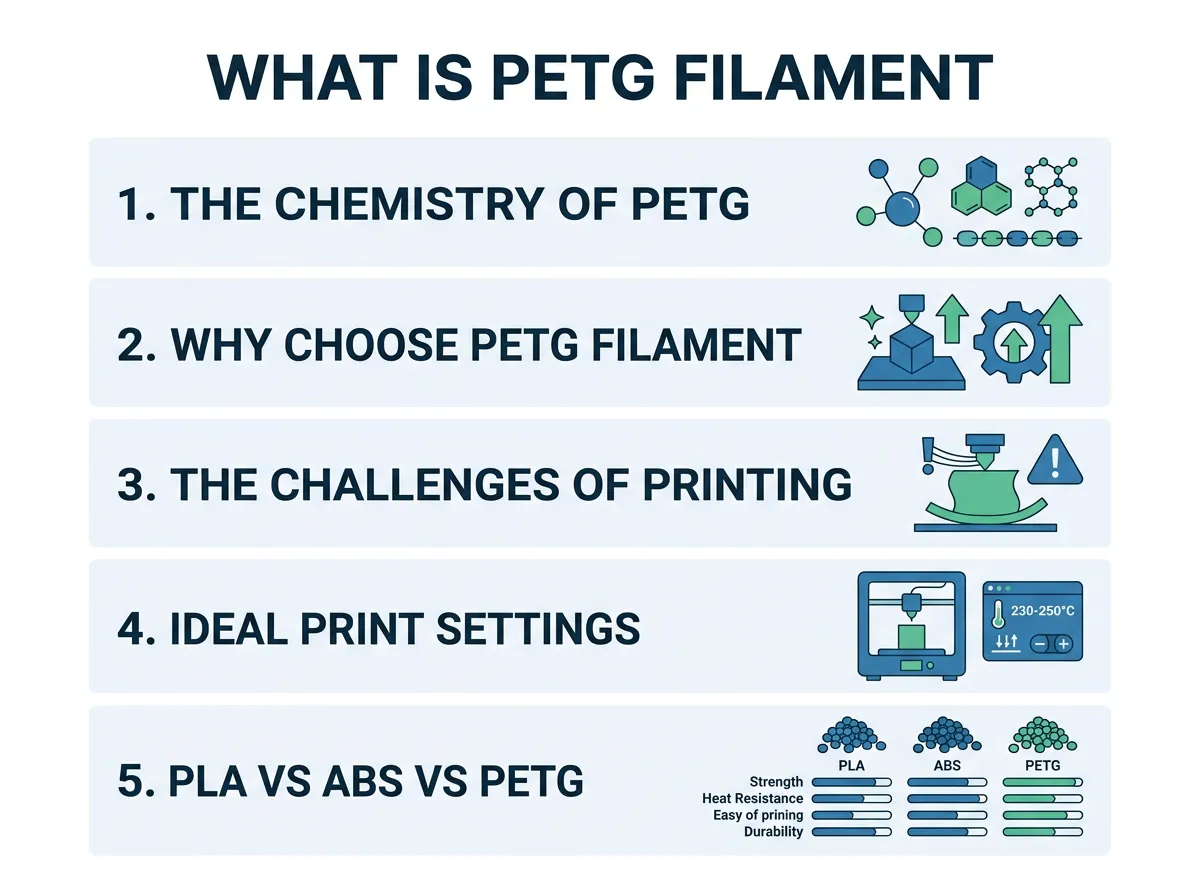
What Is PETG Filament? — key points at a glance
Amazing Strength and Impact Resistance
PETG is very tough. It does not break easily when you drop it. If you bend a PLA part, it snaps like a dry twig. But a PETG part will bend slightly before it breaks. This flex makes it great for parts that hold weight or take hits. Think of mechanical gears, heavy-duty brackets, and tools.
Excellent Weather and Chemical Resistance
Do you want to print outdoor items? PETG is the perfect choice. It does not care about the rain or the sun. It can handle UV rays without getting weak or losing color. It also resists many chemicals. Acids, bases, and salts do not hurt it. You can use it in your garden or your garage without any worries.
High Optical Clarity
Do you like clear and shiny prints? PETG is naturally very clear. It lets light pass through it beautifully. You can print lovely vases, light covers, or bottles. If you print it slowly with high heat, your parts can look almost like real glass.
The Challenges of Printing PETG (The Cons)
No material is perfect. PETG has a few quirks. You must know these challenges before you start printing with it. This will save you a lot of time and wasted plastic.
The Dreaded Stringing Issue
PETG is very sticky. When it melts, it loves to ooze out of the nozzle. This causes thin, hair-like strings on your prints. This is called stringing. It does not ruin the strength of your part, but it looks messy. You will need to clean your prints with a heat gun or a sharp knife when they are done.
It Sticks Too Well to Print Beds
This plastic is like super-glue. It sticks to glass beds and PEI sheets very well. In fact, it sticks too well. If you print directly on glass, it can rip chunks of glass right out of your bed when you try to remove the print. You must always use a release agent like a glue stick or hairspray. This creates a safe barrier between the plastic and the bed.
Moisture is PETG’s Worst Enemy
PETG acts like a sponge. It drinks water right out of the damp air. Wet PETG will pop and hiss during printing. It will also make your prints look bubbly and feel weak. You must store your spools in an airtight bag or dry box with silica gel packets.
Ideal Print Settings for PETG
To get good results, you must set up your 3D printer correctly. Here are the best settings to start with. You can tweak them to fit your specific printer.
Hotend and Bed Temperatures
PETG melts at a higher heat than PLA. Set your nozzle temperature between 230°C and 250°C. If you print too cold, the layers will not stick together. If you print too hot, the plastic will string and ooze. Set your heated print bed to 70°C or 80°C. This keeps the print flat and stops warping.
Fan Speed and Print Speed
Do not use too much cooling fan. A fast fan will cool the plastic too quickly, which makes the layers weak. Keep your cooling fan speed at 20% to 50%. You can even turn the fan off completely for the first few layers. For print speed, go slow. A speed of 40 to 50 mm/s is best. Going slow gives the sticky plastic time to lay down nicely.
Retraction Settings
Retraction pulls the filament back when the nozzle moves. This stops oozing and cuts down on stringing. For Bowden printers, set your retraction distance to 5 mm or 6 mm. For direct drive printers, set it to 1 mm or 2 mm. Keep your retraction speed at around 40 mm/s.
PLA vs. ABS vs. PETG: Which Is Best?
How does PETG compare to other common plastics? Let us look at the big three choices to help you decide which one you need.
When to Use PLA
PLA is the king of ease. It does not smell, and it prints at low heat. Choose PLA for toys, display models, and things that stay inside your home. It is cheap and comes in many fun colors. But do not use it for parts that need to hold heavy loads or sit in a hot car.
When to Use ABS
ABS is very strong and can stand high heat. But it is very hard to print. It smells bad and warps easily. You need a closed printer to print it well. Use ABS only if you need very high heat resistance or plan to smooth your prints with acetone vapors.
When to Choose PETG
Choose PETG for almost everything else! It gives you the strength of ABS without the bad smell or warping. It is the best choice for outdoor parts, functional tools, and water-tight containers. It is the ultimate utility player in your filament collection.
Top Tips for Perfect PETG Prints
Here are three quick tips to help you succeed on your very first try.
First, use a glue stick. Apply a thin layer of glue to your print bed. This does not make it stick more. Instead, it acts as a shield. It helps you pull the print off easily when it is cold.
Second, dry your filament. If your print looks rough, dry the spool. You can use a food dehydrator or a filament dryer. Set the heat to 55°C for four hours. This will make it print like new again.
Third, adjust your Z-offset. PETG does not like to be squished onto the bed like PLA. Raise your nozzle by a tiny bit. A gap of about 0.05 mm extra will give the plastic room to flow without sticking to the nozzle.
Conclusion
PETG filament is a true workhorse material. It bridges the gap between easy toys and tough engineering parts. It takes a little practice to stop the stringing, but the rewards are huge. You get strong, weather-proof, and lasting parts. Buy a roll of PETG filament today, set your heat high, and start making prints that last!
Frequently Asked Questions
What is the best bed temperature for PETG?
The best bed temperature for PETG is usually between 70°C and 80°C. This helps the plastic stick to the build plate and prevents warping. Make sure to use a release agent so it does not damage your bed.
Can I print PETG without a heated bed?
No, it is very hard to print PETG without a heated bed. The plastic will warp and peel away from the print surface as it cools down. A heated bed is highly recommended for good results.
How do I store PETG filament?
You should store PETG in an airtight container or a vacuum bag with dry silica gel packs. PETG easily absorbs moisture from the air, which can ruin your print quality. Keeping it dry is key to successful prints.
Does PETG smell when printing?
PETG has almost no smell when you print with it. Unlike ABS, which releases strong and harmful fumes, PETG is very pleasant to use indoors. However, it is still a good idea to keep your room ventilated.
Is PETG stronger than PLA?
Yes, PETG is much stronger and more durable than PLA. It can bend under pressure without breaking, whereas PLA is stiff and brittle. PETG also handles heat and outdoor weather much better than PLA.
What fan speed should I use for PETG?
You should use a low fan speed of about 20% to 50% for PETG prints. High fan speeds will cool the plastic too quickly, which makes the layers weak and easy to split. You can even turn the fan off completely for the first few layers.
