


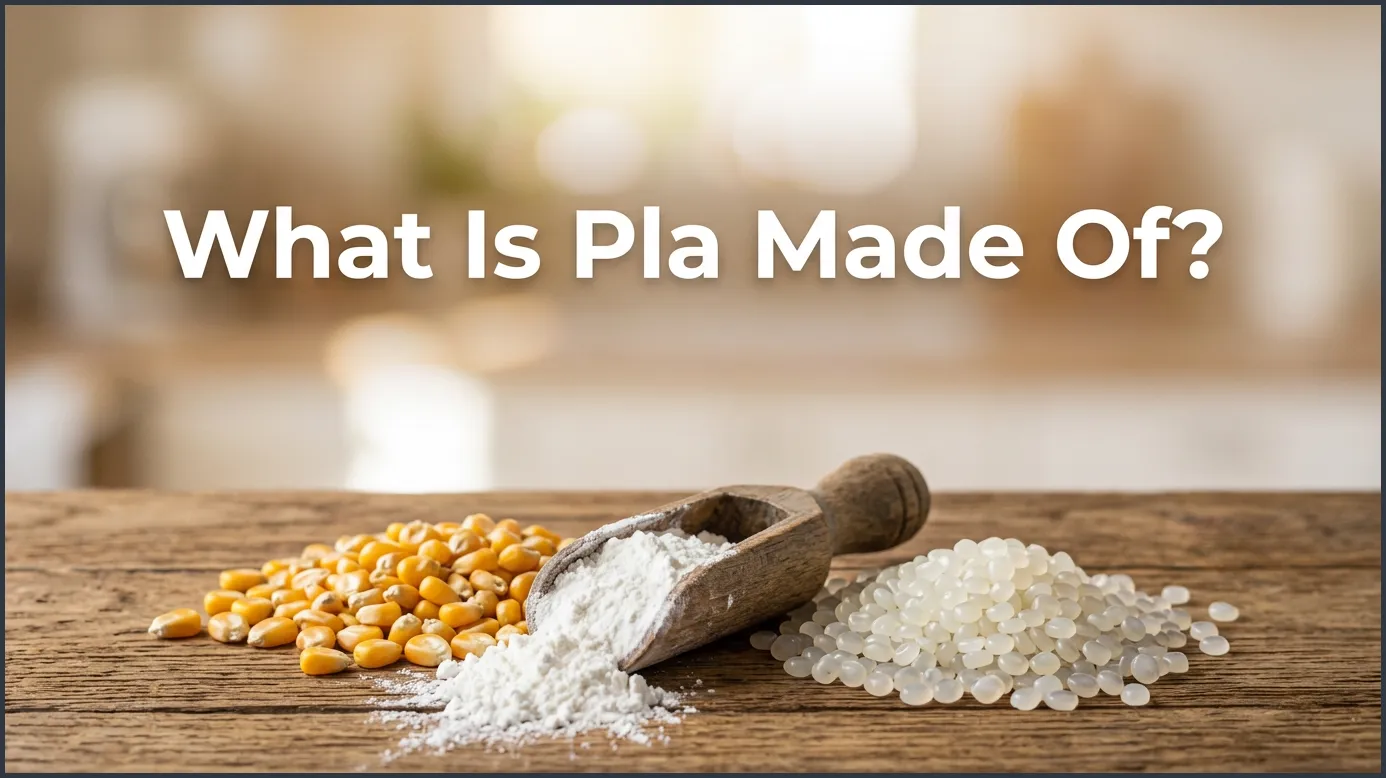
PLA, or polylactic acid, is a bio-based plastic made entirely from renewable plant resources like corn starch, cassava roots, or sugarcane. Unlike traditional plastics derived from petroleum, PLA relies on fermenting these natural plant sugars into lactic acid, which is then polymerized. This eco-friendly origin makes it a highly popular, compostable alternative for 3D printing and food packaging.
Imagine holding a clear, shiny plastic cup at a local coffee shop. It looks and feels exactly like standard plastic. However, when you look closely at the bottom, you notice a small green leaf logo and the letters “PLA.” Or perhaps you have watched a 3D printer glide back and forth, melting a colorful spool of plastic thread with a surprisingly sweet, pancake-like aroma. In both cases, you are interacting with one of the most exciting materials of the modern era.
As we all look for ways to reduce our impact on the planet, alternative materials are stepping into the spotlight. Traditional plastics have a bad reputation, and for good reasons. They last for centuries, pollute our oceans, and rely heavily on oil drilling. This environmental crisis has led many people to ask: What Is PLA Made Of?
In this guide, we will break down the science, the raw ingredients, and the manufacturing process behind this fascinating material. You will learn how simple farm crops transform into durable, usable items, and whether this material is truly as green as it seems.
Key Takeaways
- 100% Plant-Based: PLA is derived from renewable crops like corn, sugarcane, and cassava rather than fossil fuels.
- Fermentation Process: Manufacturers extract starch from these crops and ferment it using bacteria to produce lactic acid.
- Eco-Friendly Alternative: It has a much lower carbon footprint during production compared to petroleum-based plastics.
- Industrial Compostability: While PLA is biodegradable, it requires specific industrial composting facilities to break down efficiently.
- Versatile Applications: Its unique properties make it the leading material for 3D printing filaments and eco-friendly food packaging.
Quick Answers to Common Questions
Is PLA made from real plastic?
Yes, PLA is a real plastic, but it is a bioplastic made from plant sugars rather than petroleum.
Can you eat PLA since it is made from corn?
No, you cannot eat PLA because the chemical polymerization process turns the natural starch into a synthetic plastic that human bodies cannot digest.
Is PLA plastic biodegradable in backyard compost bins?
No, PLA will not degrade in backyard compost bins because it requires the high heat and humidity of industrial composting facilities to break down.
Does PLA release toxic fumes when heated?
No, PLA is generally considered non-toxic and releases a sweet, harmless corn-like aroma when heated during 3D printing.
Why is PLA used so much in 3D printing?
PLA is popular because it melts at low temperatures, does not warp, and is incredibly easy to print with compared to other plastics.
📑 Table of Contents
The Green Source: Raw Ingredients of PLA
To truly answer What Is PLA Made Of?, we have to start our journey on the farm. Unlike traditional plastics, which come from crude oil and natural gas, PLA is a bioplastic. This means it is made from renewable, organic materials. The primary source of these materials is agricultural crops that are rich in starch and sugar.
Corn Starch: The Industry Standard
In North America and Europe, the vast majority of PLA is made from corn. Specifically, manufacturers use yellow dent corn, which is primarily grown to feed livestock and create industrial products. This corn is rich in starch, which is a natural polymer made of long chains of sugar molecules. By tapping into these massive corn harvests, producers can create a steady supply of raw materials without relying on fossil fuels.
Sugarcane and Cassava: Global Alternatives
While corn is king in some regions, other parts of the world look to different crops. In tropical climates, sugarcane is the preferred raw material. Sugarcane contains high amounts of sucrose, which is very easy to extract and ferment. In other regions, cassava roots serve as the primary starch source. These diverse options show that the answer to What Is PLA Made Of? can change depending on what crops grow best locally. This flexibility makes bioplastics a viable option for countries all over the globe.
From Crop to Plastic: The Chemical Process
How does a wet ear of corn or a stalk of sugarcane turn into a hard plastic cup? The journey is a beautiful mix of agriculture and modern chemistry. To understand What Is PLA Made Of?, we must look at the step-by-step transformation process.
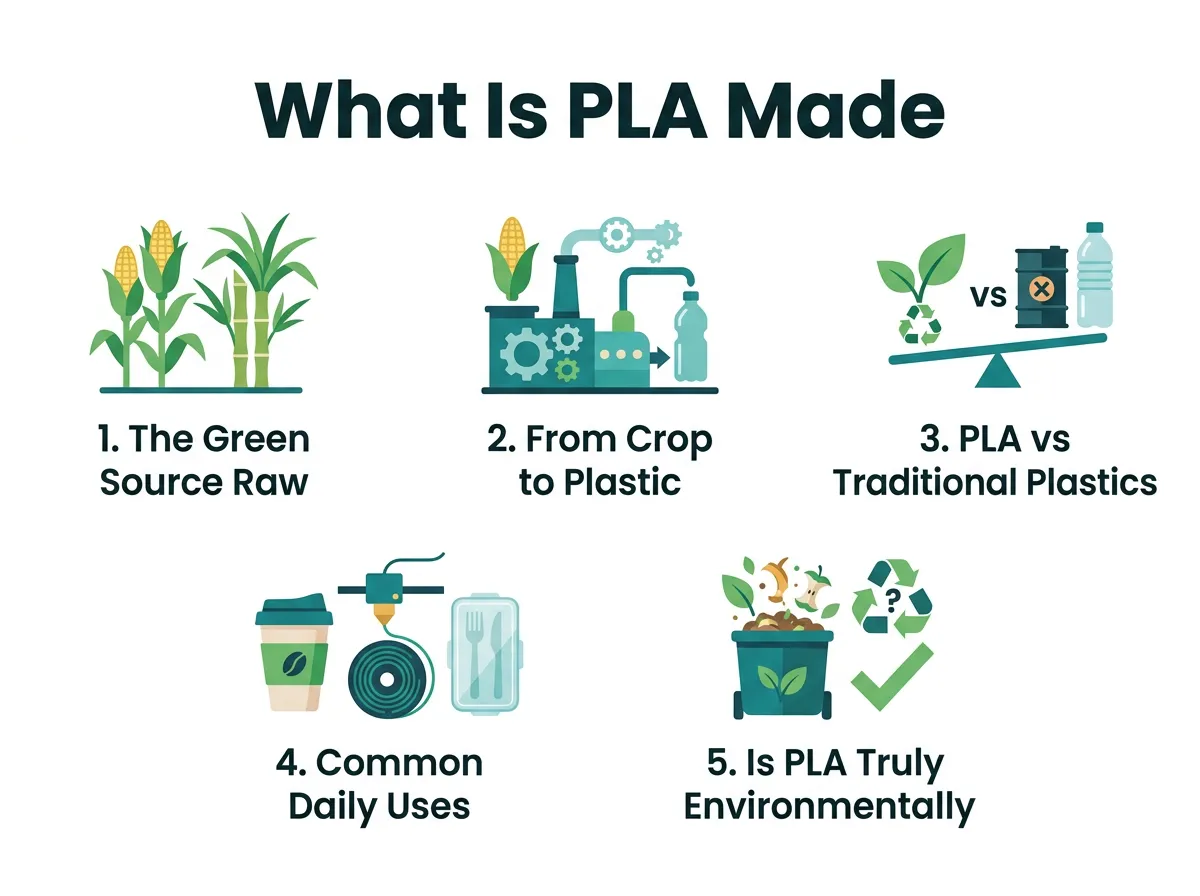
What Is PLA Made Of? — key points at a glance
Wet Milling and Sugar Extraction
First, the harvested crops go through a process called wet milling. In this step, the corn kernels are steeped in warm water and ground up. This grinding separates the protein, fiber, and oil from the starch. Once the starch is isolated, enzymes are added to break the complex starch molecules down into simple sugars, primarily dextrose (glucose).
Fermentation to Lactic Acid
Next comes the biological magic. The dextrose is placed into large fermentation vats, very similar to those used in breweries. Special bacteria are introduced to eat the sugars. As the bacteria consume the dextrose, they produce lactic acid as a byproduct. This is the exact same acid that builds up in your muscles during a hard workout, and it is also what gives yogurt its tangy flavor.
Polymerization: Turning Acid into Plastic
Lactic acid on its own is a liquid, so it cannot be used to make solid products yet. To turn it into a plastic, chemical engineers must link the individual lactic acid molecules together into long, strong chains. This step is called polymerization.
There are two main ways to do this. The most common method involves turning lactic acid into a cyclic lactide monomer, and then using a catalyst to open the rings and link them together. If you want to dive deeper into the chemistry, you can read more about the production process of PLA resin to see how these molecular bonds are formed. Once this process is complete, we get polylactic acid (PLA) in the form of raw plastic pellets, ready to be melted and shaped.
PLA vs. Traditional Plastics: What is the Difference?
Understanding What Is PLA Made Of? helps us see why it behaves so differently from oil-based plastics. Let us compare these two materials to see how they stack up in terms of origin, safety, and energy.
Petroleum vs. Plants
Traditional plastics, like PET or polystyrene, are made from non-renewable petrochemicals. This process locks carbon from deep underground into materials that stay on the surface of the Earth forever. PLA, on the other hand, uses plants that pull carbon dioxide out of the atmosphere as they grow. This creates a closed-loop system where the carbon cycle remains balanced.
Carbon Footprint and Energy Use
The manufacturing process of PLA requires significantly less fossil fuel energy than traditional plastics. Because it relies on natural fermentation, the carbon footprint of producing PLA is up to 68% lower than that of conventional plastics. To explore the broader scientific definitions and history of this material, you can check out the Polylactic acid page on Wikipedia.
Common Daily Uses of PLA
Because PLA is easy to melt, shape, and dye, it has found a home in many different industries. If you look around your house, you might already own several items made from this plant-based material.
The King of 3D Printing Filaments
If you have ever used a desktop 3D printer, you have almost certainly handled PLA. It is the absolute favorite material for beginners and professionals alike. It melts at a relatively low temperature, does not warp easily, and does not require a heated print bed. Plus, it does not emit toxic, bad-smelling fumes when heated. For those interested in the physical properties of these filaments, you can explore the details on the Hatchbox PLA material guide.
Eco-Friendly Food Packaging
Many fast-casual restaurants and grocery stores are switching to PLA for their takeout containers. You will find it in clear cold-drink cups, salad bowls, deli containers, and straw wrappers. It is lightweight, crystal clear, and completely oil-resistant, making it perfect for food service.
Is PLA Truly Environmentally Friendly?
The question of What Is PLA Made Of? is closely tied to its end-of-life cycle. Because it is made of plants, many people assume they can simply throw a PLA cup into their backyard garden and watch it disappear. However, the reality is a bit more complex.
Under What Conditions Does PLA Biodegrade?
While PLA is biodegradable, it is not easily compostable in a backyard compost pile. It requires high temperatures, high humidity, and specific microbes to break down. These conditions are only found in professional, industrial composting facilities. If you want to learn more about how long this takes and the environmental science behind it, you can read about whether PLA is truly biodegradable in different environments.
The Industrial Composting Reality
If PLA ends up in a standard landfill, it will behave very similarly to traditional plastic. Without oxygen and heat, it can take centuries to break down. Therefore, to get the true environmental benefits of PLA, we must build better composting infrastructure so these materials can be disposed of correctly.
Summary and Final Thoughts
We started with a simple question: What Is PLA Made Of? Over the course of this article, we discovered that the answer lies in our agricultural fields. By fermenting the sugars found in corn, sugarcane, and cassava, scientists have created a highly versatile bioplastic that reduces our dependence on oil.
While PLA is not a perfect cure-all for our plastic pollution problem, it represents a massive step forward. It gives us a cleaner way to print 3D models, package our food, and reduce our carbon emissions. By understanding what our everyday items are made of, we can make smarter, more sustainable choices for our homes and our planet.
Frequently Asked Questions
What does PLA stand for?
PLA stands for polylactic acid. It gets this name because it is made by linking together many individual molecules of lactic acid into a long chain, which is called a polymer.
Is PLA water-soluble?
No, PLA is not water-soluble and will not dissolve when exposed to liquid at room temperature. This water resistance makes it highly effective for cold-drink cups and food packaging.
How long does it take for PLA to decompose?
In a professional, industrial composting facility, PLA can break down into water and carbon dioxide in about 45 to 90 days. However, in a standard landfill or the ocean, it can take hundreds of years to decompose.
Is PLA safe for food contact?
Yes, pure PLA is generally recognized as safe for food contact by regulatory agencies like the FDA. However, users should be careful with 3D-printed items, as bacteria can hide in the tiny gaps between printed layers.
Can you recycle PLA with normal plastics?
No, PLA cannot be recycled in the same bin as traditional plastics like PET (number 1) or HDPE (number 2). Mixing PLA with standard plastics can ruin the entire batch of recycled material, so it must be sorted separately.
Which plants are most commonly used to make PLA?
The most common crop used to make PLA is corn, particularly in the United States. In other parts of the world, manufacturers often use sugarcane, cassava roots, or sugar beets to extract the starch needed for production.
