


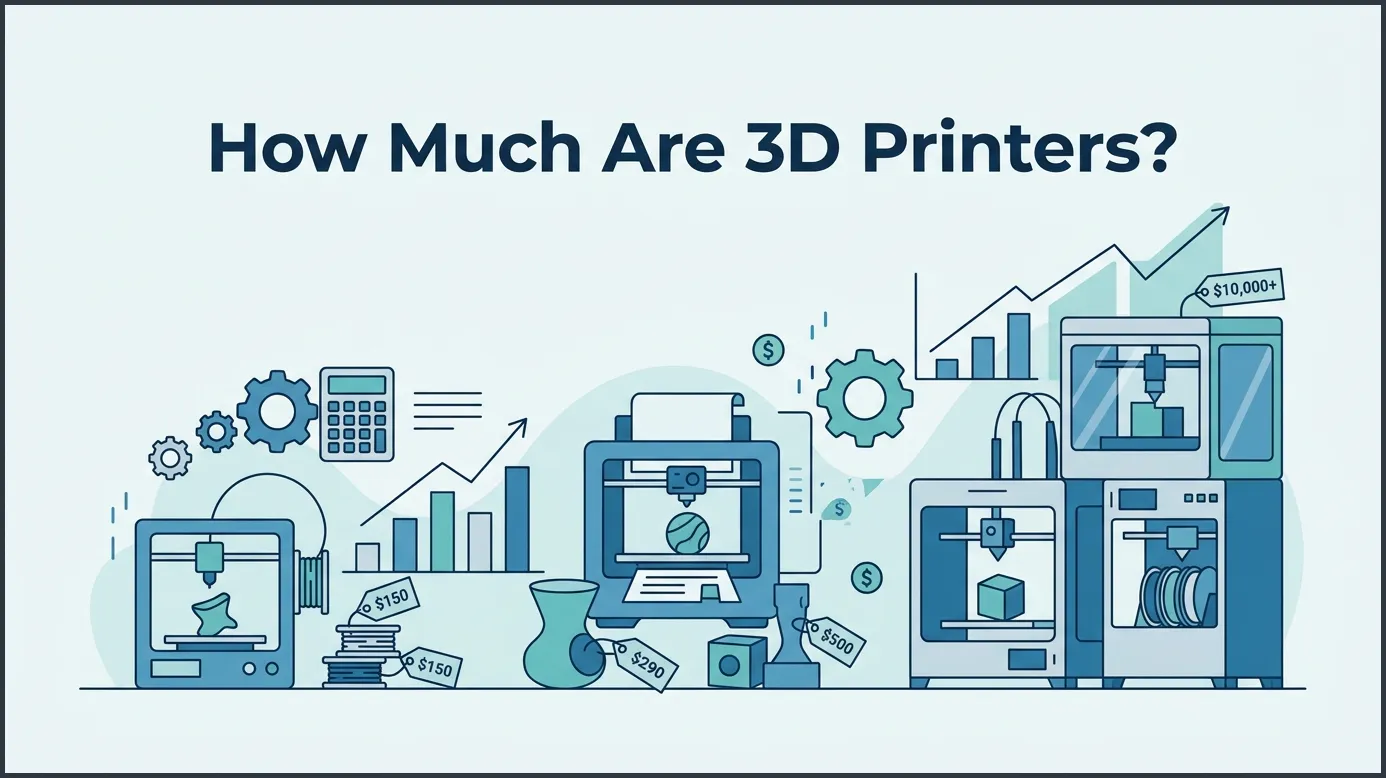
3D printer prices vary wildly, starting around $150 to $300 for entry-level hobbyist models, while professional desktop machines range from $1,000 to $5,000. For industrial-grade production systems, prices can climb anywhere from $10,000 to well over $100,000. Understanding your specific needs, such as print size, material type, and accuracy, will help you find the right machine for your budget.
Imagine waking up with an idea for a cool toy. A few hours later, you hold that toy in your hand. It sounds like magic. Yet, this is just a normal day in the world of 3D printing. You can make custom models. You can fix broken tools around your home. You can even build a prototype for a new business. A 3D printer makes all of this possible right from your desk.
But when you start looking online, you will see a huge range in prices. Some machines cost less than a cheap phone. Others cost as much as a new car. It is easy to feel confused by all these choices. You might wonder: How Much Are 3D Printers in today’s market, and why is there such a big gap in cost? Do you need to spend thousands of dollars, or can a cheap model do the job?
In this guide, we will look at the real cost of entering this amazing hobby. We will break down the different price tiers. We will look at what you get for your money. We will also talk about the hidden costs that many beginners forget. By the end of this post, you will know exactly which machine fits your budget and your creative dreams.
Key Takeaways
- Entry-Level Price Range: Beginner-friendly FDM and resin printers cost between $150 and $500, offering a great starting point for hobbyists.
- Professional-Grade Budgets: Mid-range and professional printers range from $1,000 to $5,000, providing better reliability, larger build volumes, and advanced features.
- Industrial Investment: High-end industrial 3D printers can cost from $10,000 to more than $100,000, designed for manufacturing and engineering-grade materials.
- FDM vs. Resin: FDM printers are cheaper to run and great for structural parts, while resin printers offer incredible detail for miniatures but require post-processing.
- Hidden Ongoing Costs: Beyond the initial purchase, you must budget for filament or resin, spare parts, software licenses, and safety equipment.
Quick Answers to Common Questions
What is the cheapest 3D printer you can buy?
The cheapest usable 3D printers start around $150 to $200. These are typically basic FDM entry-level kits that require some manual assembly and tuning.
Do you need a computer to use a 3D printer?
Yes, you need a computer to run slicing software, which converts your 3D models into instructions the printer can read. However, once sliced, you can often transfer the file via SD card or Wi-Fi to print without the computer being connected.
How much does 3D printer filament cost?
A standard one-kilogram spool of PLA filament usually costs between $20 and $30. Specialty filaments like carbon fiber or flexible TPU can cost $40 to $80 per spool.
Are resin 3D printers more expensive than FDM printers?
While basic resin printers are priced similarly to FDM printers at around $200, the overall cost of ownership is higher due to expensive resins, cleaning alcohol, and necessary safety gear.
Is 3D printing an expensive hobby?
It can be very affordable if you start with a budget printer under $200 and stick to standard PLA filament. It only gets expensive if you purchase premium machines, specialty materials, or frequent hardware upgrades.
📑 Table of Contents
What Determines the Cost of a 3D Printer?
Not all 3D printers are built the same way. The technology inside them plays a massive role in their price. Let us look at the main factors that make some machines cheap and others very expensive.
Printing Technology (FDM vs. Resin)
The most common type of printer is called Fused Deposition Modeling, or FDM. These machines melt plastic filament and build objects layer by layer. They are usually the most affordable and easiest to use. On the other hand, we have resin printers. These use UV light to cure liquid resin into solid plastic. Resin printers offer amazing detail, but they require more safety gear and extra clean-up steps.
Build Volume and Build Quality
Size matters a lot in this hobby. The build volume is the maximum size of an object you can print. Larger build volumes require sturdier frames. They also need bigger heated beds and stronger motors. All of these additions raise the price. Also, the materials used to build the printer itself affect the cost. A cheap printer made with plastic parts will cost much less than a heavy machine made with all-metal frames and smooth linear rails.
Entry-Level 3D Printers: $150 to $500
If you are new to this world, you might wonder: How Much Are 3D Printers for someone just starting out? The good news is that you do not need to spend a fortune to get started. Budget machines have improved a lot over the last few years.
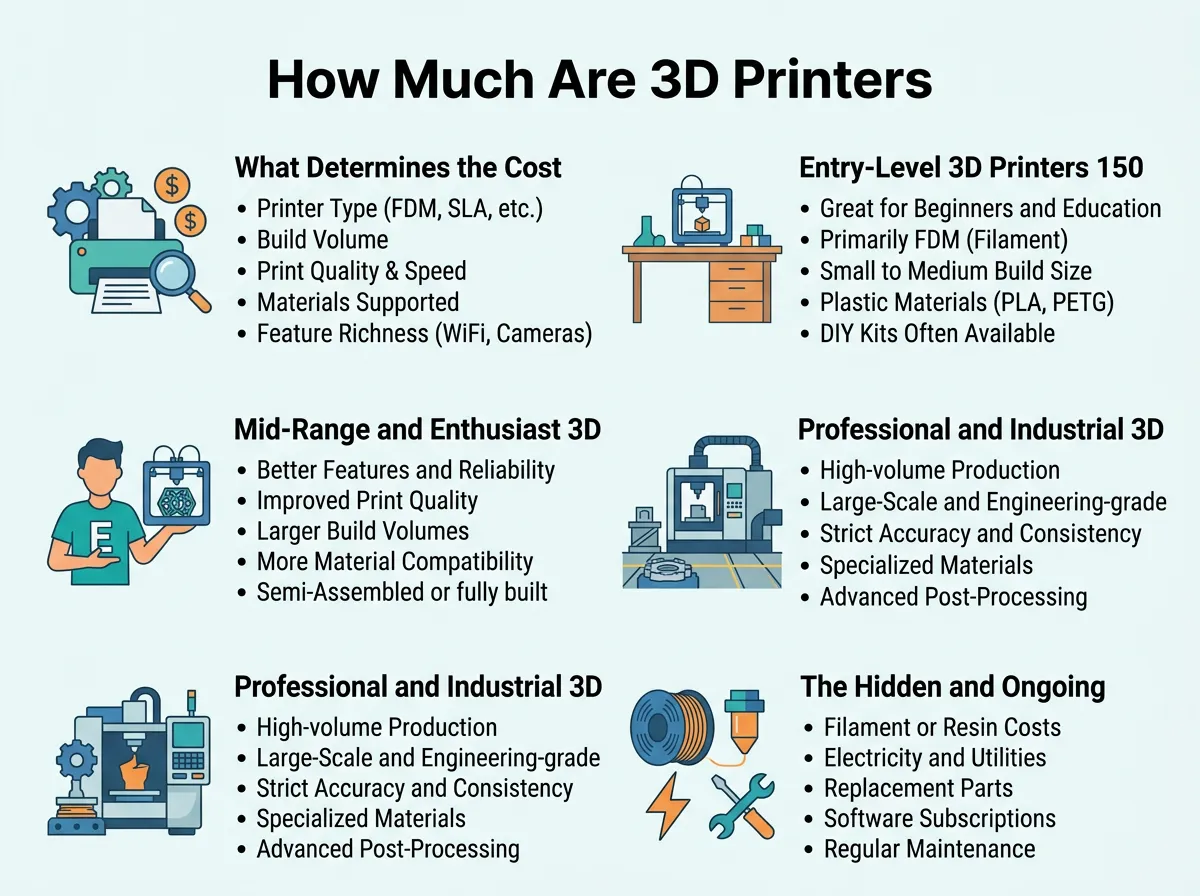
How Much Are 3D Printers? — key points at a glance
The Best Choices for Beginners
In the $150 to $500 range, you can find incredibly capable machines. Brands like Creality and Anycubic make great budget options. These printers allow you to print beautiful models right in your bedroom. You can find both FDM and resin printers in this budget. Many hobbyists spend their entire printing journey in this tier because the machines are so fun to modify. You can browse various budget-friendly models through trusted distributors of 3D printers to see what fits your space.
What You Get (and Sacrifice) at This Price
For under $500, you get a machine that can print high-quality parts, but it requires patience. You will often have to level the print bed manually. The printing speeds are slower, and you might have to build the printer yourself from a kit. If something goes wrong, you will need to do your own troubleshooting by looking up guides online. It is a fantastic way to learn how the machines work, but it takes time and effort.
Mid-Range and Enthusiast 3D Printers: $500 to $1,500
When you step up to the mid-range tier, you are paying for convenience, speed, and reliability. You no longer have to spend hours tweaking settings just to get a good print. The machine does the hard work for you.
Premium Features for Smarter Printing
In this range, you will find features like automatic bed leveling, built-in cameras, and touchscreens. Many of these printers come fully assembled out of the box. They also print much faster than budget models. Brands like Bambu Lab and Prusa are famous in this price range. They use smart sensors to detect if your print is failing or if you run out of plastic filament. This saves you both time and material.
Who Should Buy in This Range?
If you have a busy life and want a machine that just works, this is your sweet spot. It is also perfect for schools, makerspaces, and small business owners who need to print daily without constant maintenance. You get professional results without the industrial price tag.
Professional and Industrial 3D Printers: $1,500 to $10,000+
For businesses, engineers, and designers, a standard desktop printer might not cut it. They need high-precision tools that can work with advanced materials and print day in and day out without failing.
Engineering-Grade Materials and Reliability
These high-end machines can print with advanced plastics like carbon fiber, nylon, and polycarbonate. Some industrial printers can even print with metal or bio-compatible medical resins. They feature temperature-controlled chambers to prevent warping. When buying at this level, you are also paying for dedicated customer support and software integration. To learn more about how businesses evaluate these big investments, you can check out this guide on how to calculate the overall operating costs of a 3D printer.
The Hidden and Ongoing Costs of 3D Printing
When asking: How Much Are 3D Printers? many people forget to look past the price tag of the machine itself. Running a 3D printer comes with ongoing costs that you need to plan for before buying.
Materials and Filament
You will need to buy plastic filament or liquid resin to make your prints. Standard PLA filament costs about $20 to $30 per kilogram. Specialty materials, like wood-filled or glowing filaments, cost more. Resin is typically more expensive, starting around $30 to $60 per liter.
Maintenance, Parts, and Upgrades
Like any machine with moving parts, 3D printers wear out over time. You will need to replace parts like brass nozzles, PTFE tubes, and build plates. These parts are usually cheap (under $15), but they add up. You might also want to buy upgrades, like enclosed tents or air filters, to make your workspace safer. If you are looking at prices across different global markets, you can find a comprehensive 3D printer pricing breakdown that shows how regional taxes and shipping can impact these ongoing costs.
Conclusion: How Much Should You Spend?
At the end of the day, how much you should spend on a 3D printer depends on what you want to make and how much time you have. If you love tinkering, learning, and building things from scratch, a budget printer for $200 is an amazing way to start. It will teach you the basics and give you hours of fun.
However, if you want to print items for a business, or if you just want a reliable machine that works every time with zero fuss, save up for a mid-range printer in the $600 to $1,000 range. It is an investment that will save you endless frustration. Think about your goals, set a budget, and jump into the wonderful world of 3D printing today!
Frequently Asked Questions
How much does it cost to print a single 3D object?
The cost of a single print is usually very low, often ranging from $0.50 to $5.00 depending on the weight of the plastic used and electricity costs. Most slicing software will calculate the exact material cost for you before you print.
Can I use a 3D printer to make money?
Yes, many people run successful side businesses printing custom items, miniatures, or functional replacement parts. However, you will need a reliable mid-range or professional printer to ensure consistent quality and speed.
Is there free software for 3D printers?
Yes, most hobbyists use free slicing software like Ultimaker Cura or PrusaSlicer to prepare their models. You can also use free design software like Tinkercad or Fusion 360 to create your own 3D designs.
How long does a 3D printer last?
A well-maintained 3D printer can easily last for five years or more. You will just need to occasionally replace cheap consumable parts like nozzles, belts, and print beds as they wear out.
Do 3D printers use a lot of electricity?
No, most household 3D printers use about as much electricity as a standard desktop computer or a refrigerator. The main power draw comes from heating up the print bed and the nozzle at the start of a print.
Is a resin printer better than an FDM printer?
It depends on what you want to make; resin printers are superior for tiny, highly detailed models like tabletop miniatures and jewelry. FDM printers are much better for larger, tougher, and more practical everyday items.
