


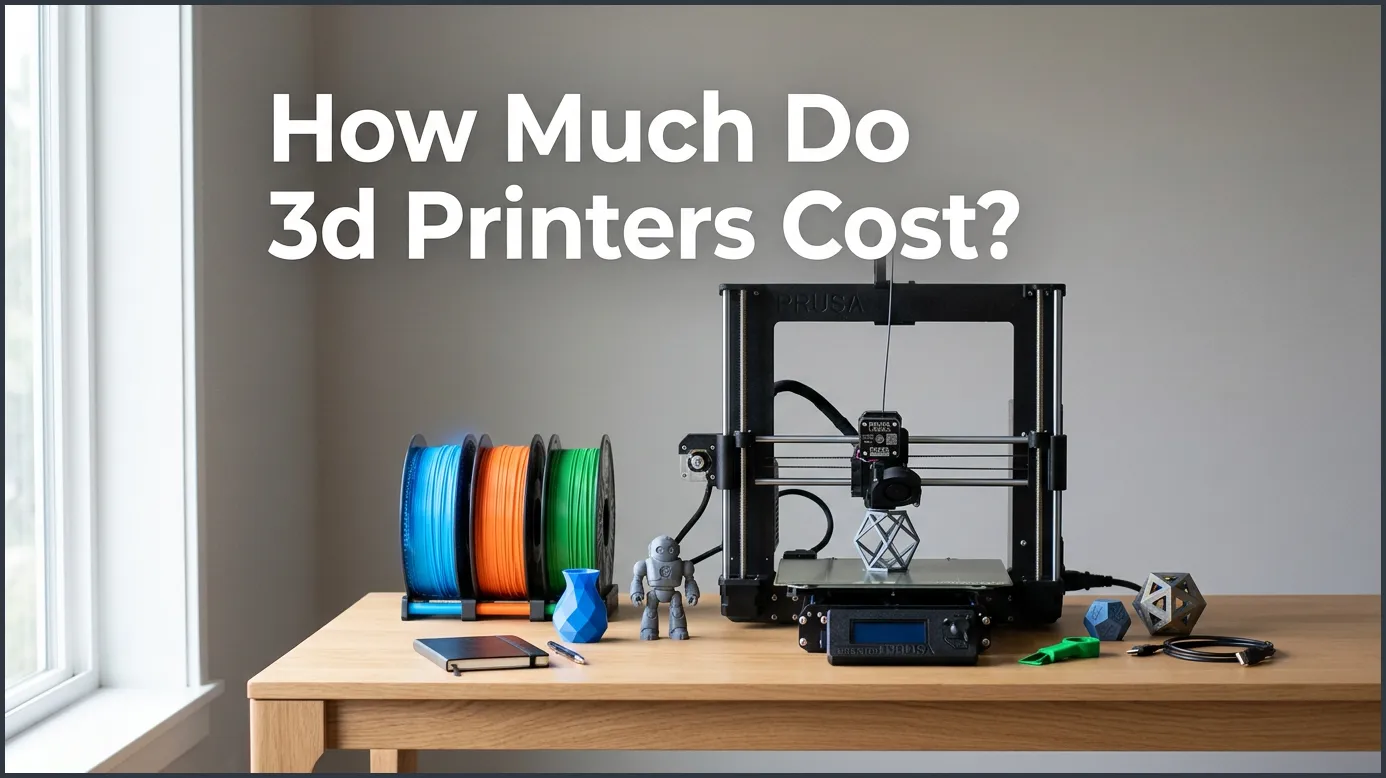
3D printer prices range widely depending on their use, starting at $150 to $300 for entry-level hobbyist machines. Mid-range and enthusiast printers cost between $400 and $1,500, while professional and industrial systems can range from $2,000 to over $10,000.
Have you ever wanted to make your own custom toys at home? Maybe you want to fix a broken shelf with a custom plastic bracket. Or perhaps you are an inventor who wants to make a fast prototype. In the past, you had to pay a factory to do these things. Today, you can do all of them right from your kitchen table. A 3D printer can turn a digital file into a solid object. This process only takes a few hours.
But when you start looking to buy a machine, you might feel lost. There are so many types and models on the market. The prices seem to go up and down. You might see one machine for $150 and another for $5,000. This leads to an important question: how much do 3D printers cost? Let us dive deep into the world of 3D printing to find out exactly what you get for your money.
In this guide, we will look at different price levels. We will see what makes some models cheap and others very expensive. We will also talk about the hidden fees that many people forget to plan for. By the end of this article, you will know exactly which printer fits your budget and your creative goals.
Key Takeaways
- Budget options are great for beginners: You can buy a decent entry-level printer for under $300.
- Mid-range printers offer convenience: Spending $400 to $1,500 gets you auto-leveling and faster speeds.
- Professional systems are for business: Industrial-grade machines cost over $2,000 but offer supreme accuracy.
- Remember the hidden costs: Filament, resin, and replacement parts add to the lifetime cost.
- Technology type affects the price: Resin printers offer amazing detail, while FDM printers are best for large parts.
Quick Answers to Common Questions
What is the cheapest 3D printer you can buy?
You can find reliable entry-level FDM 3D printers starting around $150 to $200.
Do you need a computer to use a 3D printer?
Yes, you need a computer to design or prepare your 3D files before sending them to the printer via USB, SD card, or Wi-Fi.
How much does a spool of 3D printer filament cost?
A standard one-kilogram spool of PLA filament usually costs between $20 and $30.
Is 3D printing an expensive hobby?
It can be very affordable if you start with a budget machine and print with standard PLA filament, which keeps ongoing costs low.
How long does a 3D printer last?
With proper maintenance and occasional part replacements, a good 3D printer can easily last for five years or more.
📑 Table of Contents
- The Entry-Level: Budget 3D Printers ($150 to $300)
- The Mid-Range: Enthusiast and Hobbyist Printers ($400 to $1,500)
- Professional and Industrial 3D Printers ($2,000 to $10,000+)
- Hidden and Ongoing Costs of 3D Printing
- Resin vs. FDM: How Technology Affects the Price
- Practical Tips for Choosing the Right Printer
- Conclusion
The Entry-Level: Budget 3D Printers ($150 to $300)
If you are new to this hobby, you do not need to spend a lot of money. The market for cheap printers has grown very fast over the last few years. You can easily find a great starter machine for less than the price of a new game console. Many people begin their journey here to see if they truly enjoy the hobby.
What You Get for Under $300
For this price, you will usually get a filament printer. These are also known as Fused Deposition Modeling (FDM) printers. They work by melting a plastic string and drawing layers on a flat bed. To find some great starter options, you can check out 3D printers at Best Buy to compare retail prices. Most machines in this price range come as kits. This means you will have to spend an hour or two putting the parts together yourself.
Pros and Cons of Cheap Printers
The biggest pro is the low price. These machines are great for learning the basics of 3D design and settings. However, they do have some drawbacks. They often lack premium features like automatic bed leveling. This means you must adjust the print bed by hand using screws. They also tend to print more slowly, and they can be a bit noisy. If you love to tinker and fix things, a budget printer is a perfect fit. If you want a machine that works perfectly out of the box, you might want to spend more.
The Mid-Range: Enthusiast and Hobbyist Printers ($400 to $1,500)
Once you step up to the mid-range level, the printing experience changes a lot. This is where you find machines built for people who print almost every day. If you ask a serious hobbyist, “how much do 3D printers cost for daily use?” they will likely point you to this price range.
Better Quality and Faster Speeds
Printers in this tier are much more reliable. They are often made with strong metal frames instead of cheap plastic parts. This extra strength reduces shaking, which makes your prints look much smoother. You will also get helpful features like auto-leveling, touchscreens, and Wi-Fi connection. Brand choices like the Flashforge cost breakdown show how these extra features add value to your daily projects.
Popular Choices in the Mid-Range
In this price bracket, you can buy fully enclosed printers. Enclosures keep the heat inside the printer. This is very important if you want to print with strong plastics like ABS. These plastics warp and crack if they cool down too quickly. Mid-range printers also print much faster. A print that takes ten hours on a budget printer might only take three hours on a mid-range machine, which saves you a lot of time.
Professional and Industrial 3D Printers ($2,000 to $10,000+)
Now we enter the world of business, engineering, and manufacturing. These machines are not meant for printing simple plastic toys. They are designed to make high-strength parts, medical tools, and functional prototypes that can replace metal parts.
Who Needs a Professional Printer?
Engineers, dental labs, and jewelers use these high-end systems. For these users, time is money. They cannot afford a print failure that ruins a day of work. They need a machine that works perfectly every single time. If you want to dive deeper into business costs, you can read the Formlabs guide on 3D printer costs to see how companies budget for these machines.
Advanced Materials and Precision
Industrial printers can handle advanced materials like carbon fiber and metal clays. They also have extremely high precision. The layers are so thin that you can barely see them with the naked eye. Some of these machines use lasers to cure liquid resin with micrometer accuracy. While the price tag is high, these machines pay for themselves quickly by letting companies design and test products in days instead of months.
Hidden and Ongoing Costs of 3D Printing
When you ask, “how much do 3D printers cost?” you cannot just look at the price of the machine itself. Owning a printer is a lot like owning a regular paper printer. The machine itself is just the starting cost. You also have to buy materials and keep the machine in good shape.
Filaments and Resins
The most common cost is the material you print with. For FDM printers, you buy plastic filament on spools. Standard PLA plastic costs about $20 to $30 per kilogram. If you want exotic materials like wood-filled plastic, you will pay more. If you use a resin printer, you must buy liquid resin. Resin usually costs between $30 and $80 per liter. For a detailed breakdown of these material costs, you can view Siraya Tech’s analysis of printing costs.
Replacement Parts and Upgrades
3D printers have moving parts that wear out over time. You will need to replace the brass nozzle on your printer every few months. These nozzles are cheap, usually costing only a few dollars. However, other parts like heated beds, fans, and belts can cost $15 to $50 to replace. Many hobbyists also like to upgrade their machines with better parts, which adds to the long-term cost.
Software and Power Usage
Most of the software you need to run your printer is free. Programs like Cura or PrusaSlicer do not cost a dime. You should also think about power usage. 3D printers use heaters to melt plastic. Running a printer for 24 hours will slightly increase your home electricity bill, though it usually only costs a few cents per print.
Resin vs. FDM: How Technology Affects the Price
The type of technology your printer uses has a huge impact on both the initial cost and the ongoing costs. There are two main types of printers that hobbyists buy: FDM and Resin (SLA).
Filament (FDM) Printers
FDM printers are the most common. They are very safe to use and do not require a lot of safety gear. They are great for making large items like cosplay armor, storage boxes, or brackets. FDM printers are generally cheaper to run because the plastic filament is inexpensive and lasts a long time.
Resin (SLA) Printers
Resin printers use a liquid plastic that hardens when exposed to UV light. They are amazing for making tiny, highly detailed items like miniature figures. However, resin printing can be messy. You need to wear gloves and a mask because the liquid resin has strong fumes. You also need to wash your finished prints in alcohol, which adds to the total setup cost.
Practical Tips for Choosing the Right Printer
Now that you know the costs, how do you choose the right one? Here is a simple step-by-step guide to help you make your decision:
- Define your goal: If you want to print small gaming miniatures, buy a resin printer. If you want to make large, strong parts, buy an FDM printer.
- Be honest about your budget: If you only have $200, buy a budget FDM printer. Just remember that you will need to spend some time setting it up and adjusting it.
- Think about your space: Resin printers need a well-ventilated room because of the fumes. FDM printers can be noisy, so you might not want them in your bedroom.
- Start simple: Do not buy a complex, expensive machine as your first printer. Start with a popular model so you can easily find help online if you get stuck.
Conclusion
So, how much do 3D printers cost? The answer depends entirely on what you want to achieve. For casual hobbyists and beginners, a budget of $200 to $300 is more than enough to get started with a reliable machine. If you want a smoother experience with less setup, a mid-range printer for $500 to $1,000 is a fantastic investment. For businesses and professionals who need high precision and advanced materials, industrial systems starting at $2,000 are the way to go.
Remember to plan for the extra costs of filament, resin, and replacement parts. No matter which price point you choose, entering the world of 3D printing is an exciting journey. It opens up a world of creativity and endless possibilities right inside your home.
Frequently Asked Questions
Are cheap 3D printers worth buying?
Yes, cheap 3D printers are definitely worth buying if you want to learn the basics. They require more manual setup but can still produce high-quality prints once adjusted properly.
Why are some 3D printers so expensive?
Expensive printers use high-end parts, offer faster print speeds, and have advanced features like automatic calibration. They also support advanced materials like carbon fiber and have better customer support.
How much does resin cost for a resin 3D printer?
Standard liquid resin typically costs between $30 and $80 per liter. Specialized engineering or dental resins can cost significantly more.
Does a 3D printer use a lot of electricity?
No, a 3D printer does not use a large amount of electricity. Running a standard printer for several hours usually costs only a few cents on your electric bill.
What is the difference between FDM and resin printing costs?
FDM printing is generally cheaper because filament is less expensive and requires fewer post-processing supplies. Resin printing requires extra purchases like isopropyl alcohol, curing lamps, and gloves.
Do I need to pay for 3D printing software?
No, most hobbyists use free software like Cura or PrusaSlicer to prepare their models. Professional design software may require a paid subscription, but it is not necessary for beginners.
