


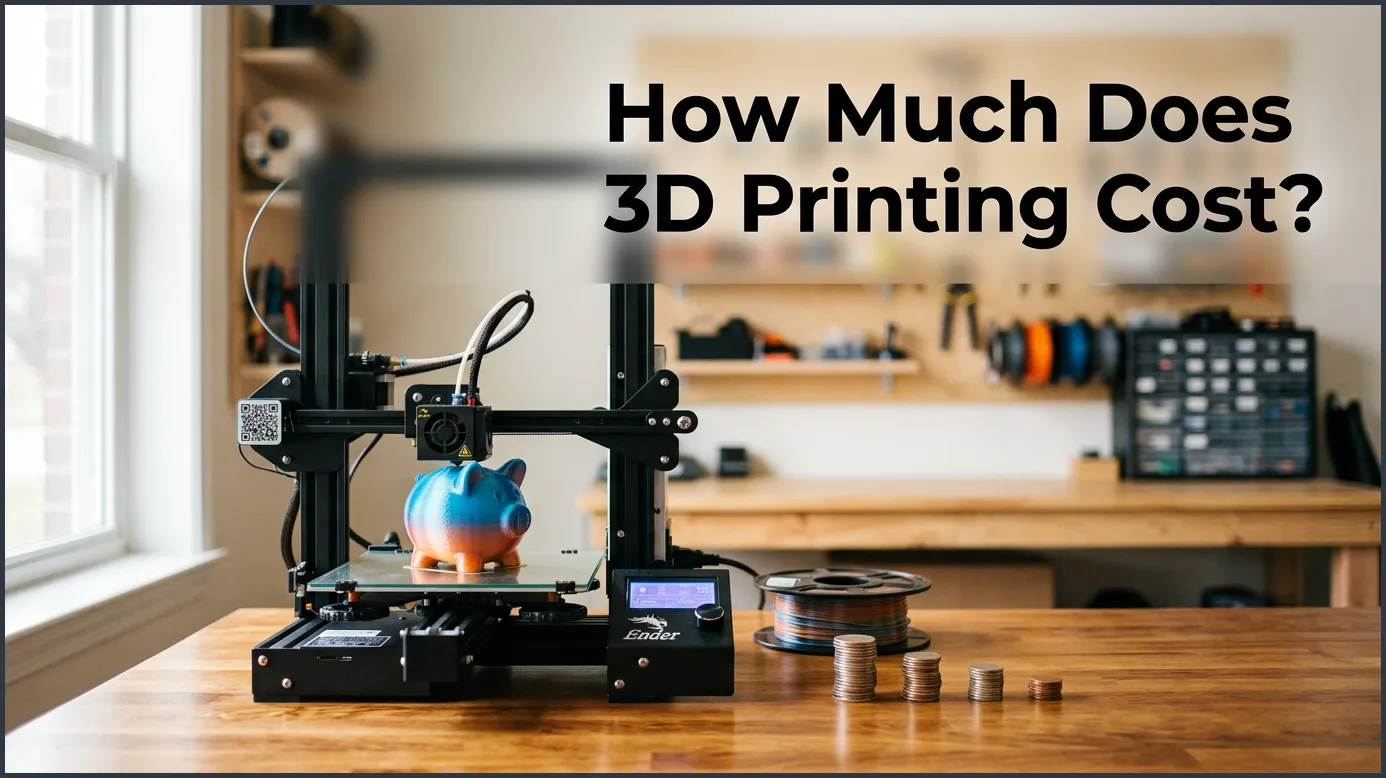
How much does 3D printing cost? The price of 3D printing ranges from a few cents for small plastic parts to thousands of dollars for industrial metal objects. For a typical hobbyist, a basic entry-level setup costs around $200 to $500, with ongoing material costs of $20 to $40 per kilogram of filament.
Have you ever wanted to bring your wildest ideas to life? Maybe you want to make a custom phone case. Or maybe you need a rare replacement part for a broken toy. 3D printing makes this possible right from your desk. It feels like magic to watch a machine build an object layer by layer.
But before you dive into this world, you probably want to know the price tag. It is easy to get confused by all the options online. You will see super cheap machines, but you will also see very expensive industrial systems. The truth is that the final price depends on several key things.
In this guide, we will break down every single cost for you today. We will look at machine prices, material costs, power bills, and software. By the end of this article, you will know exactly what to expect when you start your printing journey.
Key Takeaways
- Machine Costs: Entry-level printers cost between $150 and $500, while industrial-grade machines can exceed $10,000.
- Material Expenses: Standard PLA and ABS plastic filaments are highly affordable, costing around $20 to $30 per kilogram.
- Post-Processing: Post-processing steps like sanding, curing, and painting add to the final cost of a printed part.
- Software and Electricity: Free design software is available, and electricity costs are usually negligible at just pennies per hour.
- Buying vs. Outsourcing: Outsourcing 3D print jobs is ideal for single prototypes, but buying a printer is cheaper for high-volume needs.
Quick Answers to Common Questions
Can I run a 3D printer on a standard home outlet?
Yes, standard home 3D printers plug directly into normal wall outlets and use very little power. They consume about the same amount of electricity as a household light bulb.
Is the software for 3D printing expensive?
No, most 3D printing software is completely free to use. You can easily find free design tools and slicing programs online.
How much does a spool of plastic filament cost?
A standard one-kilogram spool of PLA plastic filament usually costs between $20 and $30. This single spool can print dozens of small items.
Is it cheaper to buy a 3D printer or use a service?
It is cheaper to use a printing service if you only need a few items per year. Buying your own printer is much cheaper if you plan to print regularly.
Does 3D printing require a computer?
Yes, you need a computer to prepare your 3D models and send them to the printer. However, you do not need an expensive or powerful computer for basic printing.
📑 Table of Contents
Upfront Costs: Buying Your First 3D Printer
To start printing, you first need a machine. The price of a 3D printer varies a lot. It depends on what you want to make and how often you will use it.
Entry-Level Hobbyist Printers
If you are new to this world, you do not need to spend a fortune. Budget printers are amazing these days. You can find a great starter printer for $150 to $300. These machines usually use plastic filament. They are perfect for learning the basics of the hobby. You will have to build some of them yourself, but that is half the fun of learning.
Mid-Range and Professional Printers
Do you want to print faster? Do you need better detail and reliability? Mid-range printers cost between $500 and $1,500. These machines offer auto-leveling beds and enclosed print chambers. For businesses, industrial printers can cost over $10,000. These giant machines print with metal or advanced engineering plastics. To get a deeper sense of industrial pricing, you can check out this Formlabs guide to 3D printer costs which details professional investments.
The Raw Materials: What Keeps Your Printer Running
A printer is only useful if you have something to print with. Your ongoing material cost is a big part of the overall budget. If you ask yourself, how much do 3D prints cost to make, the answer starts with your materials.
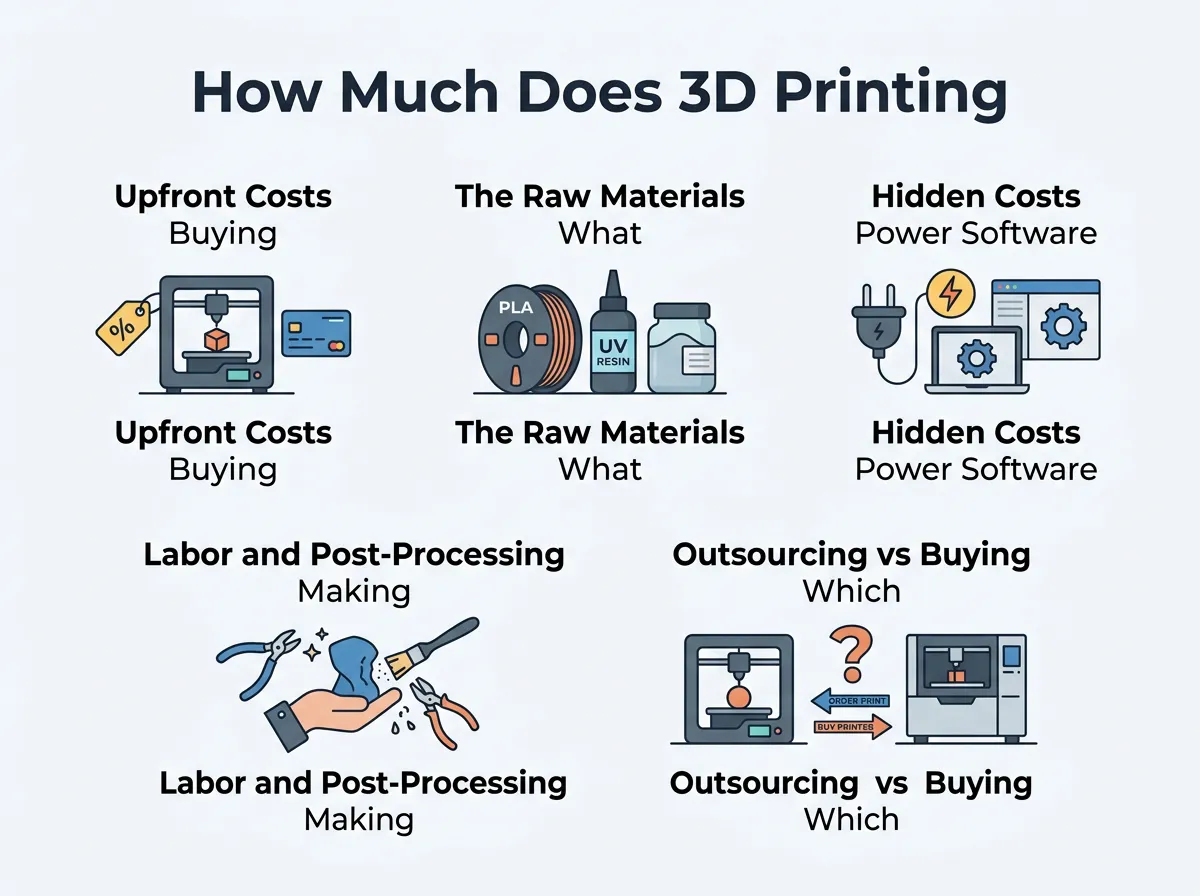
How Much Does 3D Printing Cost? — key points at a glance
Plastic Filaments (FDM)
Most home printers use spools of plastic wire called filament. The most common type is PLA. It is made from cornstarch and is very easy to use. A standard one-kilogram spool of PLA costs about $20 to $30. This spool can make dozens of small items. Other plastics like ABS or PETG cost around the same. Specialty filaments with wood or carbon fiber can cost $40 to $80 per spool.
Let us look at a few real-world examples. How much does it cost to print a standard phone case? A plastic phone case weighs about 20 grams. If your spool of PLA filament costs $20, the plastic for that case costs just 40 cents! What about a large cosplay helmet? A helmet might weigh 800 grams. That means it uses almost a whole spool, costing you around $16. This is still much cheaper than buying a replica online.
Liquid Resins (SLA)
Resin printers use liquid light-cured plastic. This method gives you incredible detail. It is perfect for tiny miniatures and jewelry. Standard resin costs about $30 to $50 per liter. Tough or flexible resins can cost up to $100 per liter. You also need isopropyl alcohol to wash the prints, which adds a few extra dollars to your budget.
Hidden Costs: Power, Software, and Maintenance
Many people forget about the extra costs of running a printer. Let us look at what else you will spend money on over time.
Electricity Consumption
Does 3D printing run up your power bill? Not really. A typical home 3D printer uses about as much power as a traditional light bulb. It draws around 100 to 300 watts of power. If you run your printer for ten hours, it might cost you less than fifty cents in electricity. It is not something that will hurt your monthly budget.
Design and Slicing Software
To print an object, you need a 3D model. You also need a slicer program to cut the model into layers. The good news is that most of this software is free. Programs like Cura and PrusaSlicer cost nothing. If you want to design your own models, Tinkercad and Fusion 360 offer free options for hobbyists. You do not need to pay for software to get started.
You can also download free 3D models from sites like Thingiverse or Printables. This means you do not have to learn how to design things right away. You can just find a file, load it into your free slicer, and start printing. This keeps your starting costs incredibly low.
Replacement Parts
Like any machine with moving parts, things will wear out. You will need to replace the brass nozzle on your printer eventually. These cost about $1 to $2 each. You might also need to replace the build surface or the belts over time. Budget about $20 to $50 a year for general maintenance and spare parts.
Labor and Post-Processing: Making It Look Good
Printing is rarely a one-step process. Once the machine stops, your work begins. This is where time and minor tool costs come into play.
Support Removal and Sanding
Many prints need temporary supports to hold up overhanging parts. You have to clip these off. You will need a pair of flush cutters for this job. After removing supports, the surface might look rough. A cheap pack of sandpaper costs about $5 and will last a long time.
Curing and Painting
If you use a resin printer, you must cure your parts under UV light. You can use the sun for free, or buy a UV curing station for $50. If you want your prints to look professional, you might want to paint them. Primer, acrylic paints, and brushes will add another $20 to $40 to your hobby budget.
Outsourcing vs. Buying: Which Is Best For You?
Do you really need to buy your own machine? Sometimes, using a service is a better choice. It all depends on your goals.
When to Use a Printing Service
If you only need one or two parts a year, do not buy a printer. Use an online service instead. They have high-end machines that can print in metal or nylon. To figure out the price of a single job, you can use a 3D printing cost calculator to estimate the rate before you buy. This helps you avoid upfront equipment costs.
When to Buy Your Own Machine
If you want to print every week, buying is much cheaper. Once you own the machine, your cost per print drops to almost nothing. You can print a small chess piece for just ten cents. You also get the joy of learning a new skill and making things on demand.
Conclusion
So, how much does 3D printing cost in the end? It is as cheap or as expensive as you want it to be. You can start this amazing hobby for under $250. That budget gets you a solid printer and your first roll of plastic. If you run a business, you might spend thousands on pro machines. No matter your budget, 3D printing is more accessible today than ever before. Start small, learn the basics, and enjoy the creative journey!
Frequently Asked Questions
What is the cheapest 3D printer you can buy?
The cheapest reliable 3D printers start at around $150. These entry-level machines are perfect for beginners who want to learn the basics without spending too much money. They usually require some basic assembly but offer great print quality for the price.
How long does it take to print a small object?
A small object like a chess piece or a coin takes about 30 minutes to an hour to print. Larger or more detailed items can take several hours or even days. The print time depends on the size of the object and the print speed you choose.
What is the most expensive part of 3D printing?
The most expensive part is usually the upfront cost of the 3D printer itself. After that, your main ongoing expense will be purchasing materials like plastic filaments or liquid resins. Luckily, these materials are quite affordable for casual hobbyists.
Does 3D printing use a lot of internet data?
No, 3D printing does not require an active internet connection to run. You only need the internet to download 3D models and software updates. The actual printing process is done locally using a memory card or USB cable.
Are resin 3D printers more expensive to run than filament printers?
Yes, resin printers are generally more expensive to run. The liquid resin itself costs more than plastic filament, and you also need extra supplies like isopropyl alcohol for cleaning. Additionally, resin prints require safety gear like gloves and masks.
Is 3D printing a cheap hobby?
Yes, 3D printing can be a very budget-friendly hobby once you cover the initial cost of the printer. Printing individual items often costs only pennies in materials and power. It is an affordable way to create custom toys, tools, and decorative items.
