


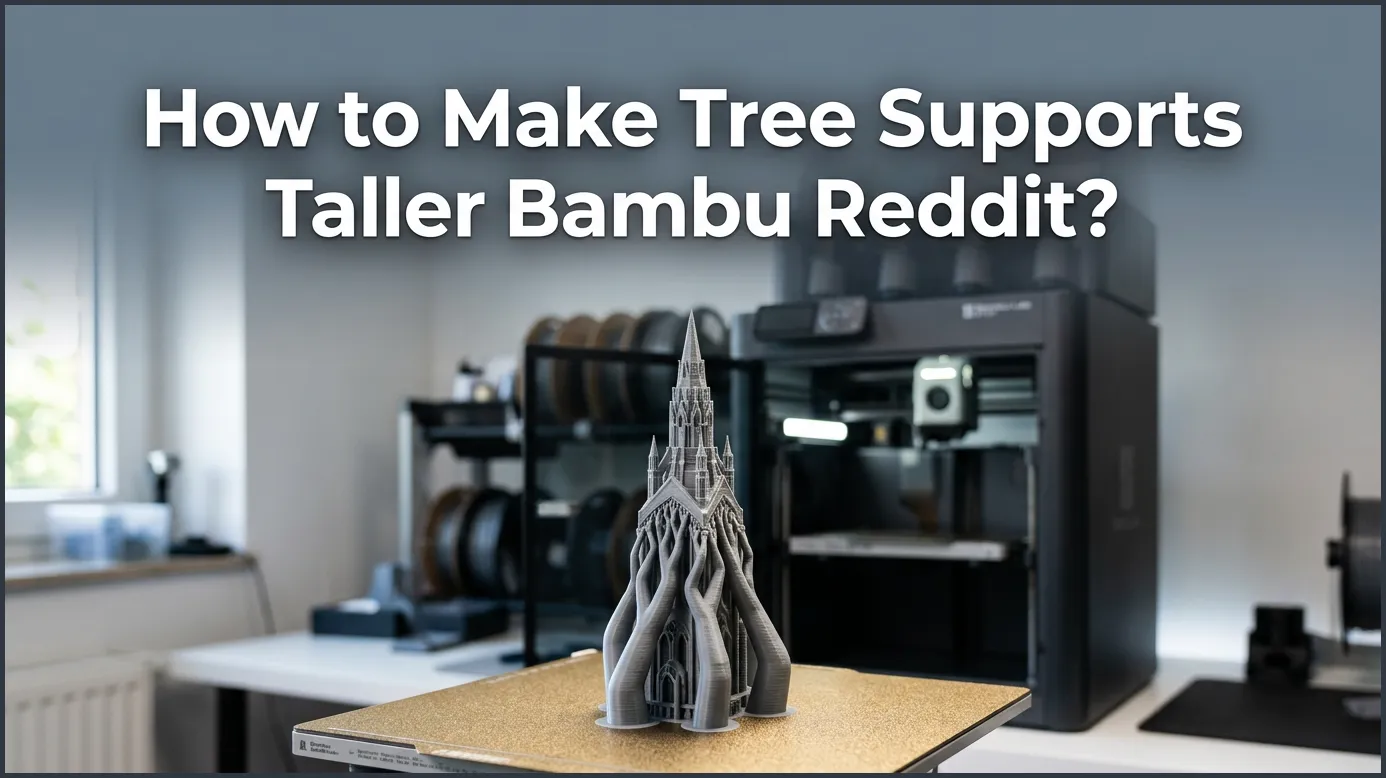
To make tree supports taller in Bambu Studio, you need to adjust key slicer settings like branch angle, wall loops, and support height limits. Many users on Reddit suggest using manual support enforcers to force branches to reach higher overhangs. Tweaking these parameters prevents supports from stopping early and ensures clean, successful 3D prints.
Have you ever started a long, exciting 3D print on your Bambu Lab printer, only to watch it fail halfway through? You look closely and see the problem. The tree supports simply stopped growing. They did not reach the high overhangs of your model. Instead of a beautiful print, you get a bird’s nest of spaghetti filament. It is a very frustrating experience that many makers face daily.
This issue happens a lot with complex designs like action figures, statues, and tall architectural models. If you are struggling with this, you are not alone. Many hobbyists look for answers online. If you search for how to make tree supports taller Bambu Reddit threads can offer a lot of helpful tips and tricks. Let us dive into the best ways to solve this issue and get perfect prints every time.
In this guide, we will break down the exact settings you need to change in Bambu Studio. We will share the best advice from the Reddit community. You will learn how to make your tree supports tall, strong, and easy to remove. Let us get started!
Key Takeaways
- Adjust Branch Angle: Increasing the branch angle allows tree supports to bend more and reach higher areas of your model.
- Increase Wall Loops: Adding more wall loops to your tree supports makes them strong and stable as they grow taller.
- Use Support Enforcers: Painting manual enforcers forces Bambu Studio to grow tall supports exactly where you need them.
- Check Bridge Distance: Adjusting the maximum bridge distance determines when the slicer decides to build a support.
- Reduce Print Speed: Slowing down the print speed for support structures prevents tall branches from wobbling and failing.
Quick Answers to Common Questions
How do I make tree supports taller in Bambu Studio?
Increase the branch angle to 45 or 50 degrees and use manual support enforcers to paint the high areas of your model.
Why do my tall tree supports wobble and fall?
Tall supports wobble because they are too thin, so you should increase the branch diameter and add a second support wall loop for stability.
What is the best way to secure tall tree supports to the bed?
Enable a wide brim in your slicer settings to give the tall tree supports a larger, stronger base on the build plate.
Should I use auto or manual tree supports for tall prints?
Manual tree supports are best because you can paint enforcers exactly where you need them, forcing the branches to grow tall.
Does lowering print speed help tall tree supports?
Yes, slowing down the support print speed reduces printer vibration and prevents the nozzle from knocking over tall, delicate branches.
📑 Table of Contents
Understanding Tree Supports in Bambu Studio
Tree supports are a fantastic feature in modern 3D printing. Unlike traditional grid supports, tree supports grow like organic branches. They start from the build plate and curve around your model to reach the areas that need support. This design saves a lot of filament and reduces print time. It also makes the supports much easier to break off when the print is done.
Bambu Studio, the default slicer for Bambu Lab printers, has an excellent tree support generator. However, the default settings do not always work for very tall or complex models. Sometimes, the slicer thinks a high overhang does not need support. Other times, the branches get too thin as they grow, causing them to wobble and break. Knowing how to tweak these settings is the key to success.
The Best Slicer Settings for Taller Tree Supports
To get your supports to reach higher, you need to open the “Support” tab in Bambu Studio. You will need to switch from “Basic” to “Advanced” view to see all the settings. Here are the most important settings to change.
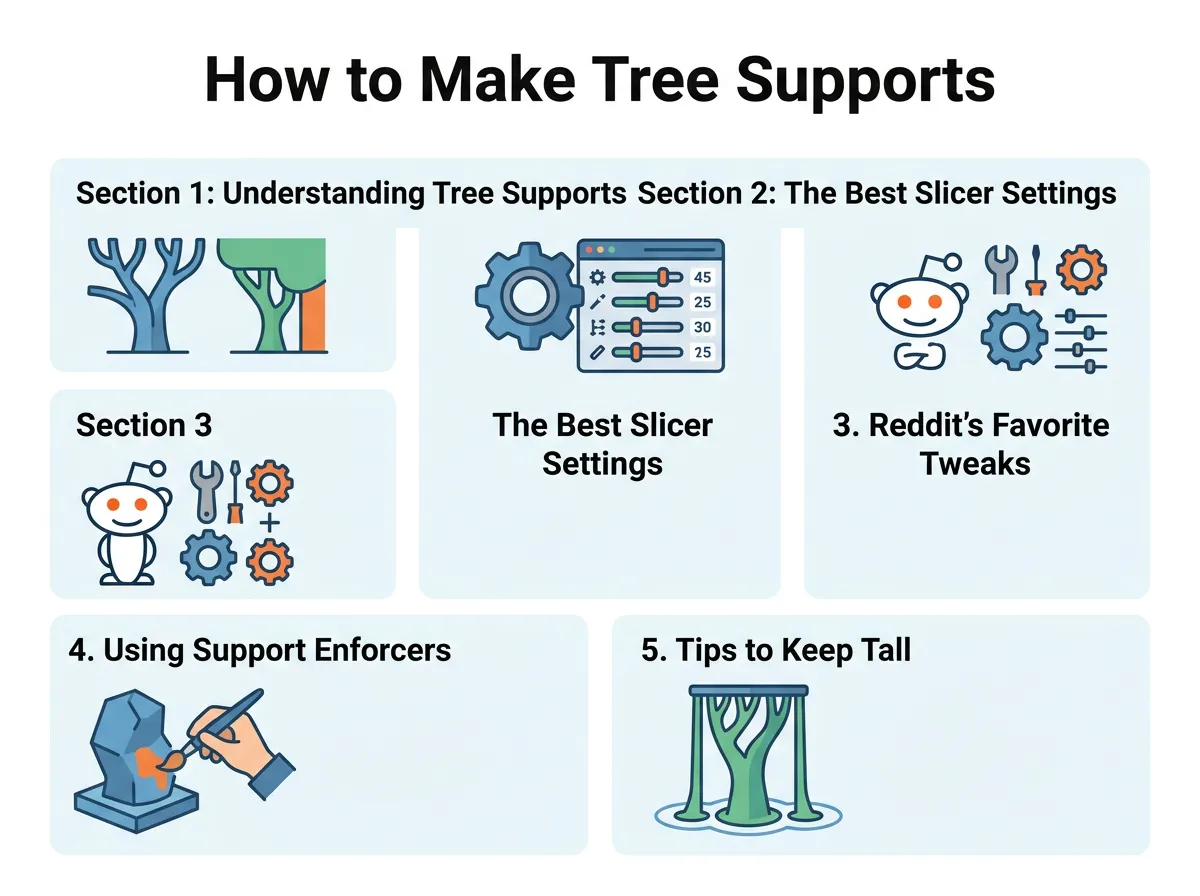
How to Make Tree Supports Taller Bambu Reddit? — key points at a glance
Adjusting the Branch Angle
The branch angle is the most critical setting for height. It controls how far a branch can lean to reach a point. The default angle is often too low. If you increase the branch angle to 45 or 50 degrees, the branches can stretch much further. This simple change allows the tree supports to bend around your model and reach tall, tricky spots. If you want to know how to make tree supports taller Bambu Reddit users highly recommend adjusting this angle first.
Increasing Branch Diameter
As tree supports grow taller, they can become thin and weak. A tall, thin branch will wobble when the print head moves fast. To prevent this, increase the branch diameter. A thicker base and trunk will keep the support steady. Look for the “Branch Diameter” setting and increase it by one or two millimeters. This small change adds a lot of strength.
Adding Support Wall Loops
By default, tree supports often print with a single wall. This keeps them light and easy to remove. However, single-wall supports are very fragile. If you are printing a tall model, change the “Support Wall Loops” from one to two. This doubles the thickness of the support walls. It makes the tall trees sturdy enough to withstand the motion of the printer.
Reddit’s Favorite Tweaks for Reach and Stability
The 3D printing community on Reddit has spent countless hours testing different settings. When looking up how to make tree supports taller Bambu Reddit discussions point to a few hidden settings that make a massive difference.
Modify the Maximum Bridge Distance
Bambu Studio decides to support an overhang based on the bridge distance. If the slicer thinks the printer can bridge the gap without support, it will not build a tree. For tall models, you want to force supports to grow. You can do this by lowering the “Maximum Bridge Distance” in the Quality tab. Setting this value lower forces the slicer to generate supports for smaller overhangs, making your tree supports grow taller.
Adjust Support Interface Spacing
The interface is the layer where the support touches your model. If the top interface spacing is too wide, the support might fail to attach. Reddit users suggest setting the top interface spacing to 0.2mm or 0.24mm. This ensures a clean connection while still making the tall support easy to peel off after printing.
Using Support Enforcers for Custom Height
Sometimes, automatic settings are just not enough. If the slicer still refuses to build a support where you want it, you can take manual control. This is one of the most reliable solutions found when researching how to make tree supports taller Bambu Reddit guides.
How to Paint Support Enforcers
Bambu Studio has a built-in tool called “Support Painting.” You can find it in the top toolbar. Click the brush icon, select “Enforce,” and paint directly on the high areas of your model that need support. When you slice the model, select “Tree (Manual)” instead of “Tree (Auto).” The slicer will now force tree branches to grow from the build plate all the way up to the painted areas. This guarantees your supports will be as tall as necessary.
Using Support Blockers
In contrast, you can also paint “Blockers” on areas where you do not want supports. This helps the slicer focus all its energy and filament on building the tall, necessary branches instead of wasting time on small, low-level supports.
Tips to Keep Tall Supports from Failing
Getting your tree supports to slice correctly is only half the battle. You also need to make sure they do not fail during the actual print. Tall supports are prone to knocking over. Here are some practical tips to keep them safe.
- Use a Brim: Always use a brim for tall prints. A brim adds a wide, flat layer around the base of your supports, locking them securely to the build plate.
- Lower the Print Speed: Slow down the print speed for the support layers. You can do this in the “Speed” tab. Slower speeds reduce vibration and keep tall trees stable.
- Clean Your Build Plate: A dirty build plate reduces adhesion. Wash your plate with warm water and dish soap before starting a tall print.
- Adjust Z-Hop: Enable Z-hop in your printer settings. This lifts the nozzle slightly when moving between areas, preventing it from knocking into tall, delicate support branches.
Conclusion
When you are learning how to make tree supports taller Bambu Reddit advice is a goldmine of information. By adjusting your branch angles, increasing wall loops, and using manual support enforcers, you can easily conquer any tall print. Do not be afraid to experiment with these settings in Bambu Studio. With a few quick changes, you will enjoy stable supports and flawless, high-quality 3D prints every single time. Happy printing!
Frequently Asked Questions
How do I stop my tree supports from merging with the model?
You can adjust the “Top Z Distance” and “XY Distance” settings in Bambu Studio. Increasing these values slightly creates a larger gap between the support and your model, making them much easier to separate without damaging the surface.
What is the difference between Tree Slim and Tree Strong supports?
Tree Slim uses less filament and prints faster, but it is less stable for tall prints. Tree Strong has thicker branches and more walls, making it the ideal choice when you need to print tall and heavy support structures.
Can I reuse the same support settings for all filaments?
While the structural settings like branch angle will work for most materials, you may need to adjust the interface distance. For sticky materials like PETG, you should increase the distance slightly compared to easy-to-print materials like PLA.
How does Z-hop prevent tall supports from failing?
Z-hop lifts the print head slightly when it travels over printed areas. This prevents the nozzle from accidentally dragging across or colliding with the top of tall, flexible tree branches, which can knock them off the build plate.
How do I force tree supports to start from the build plate only?
In Bambu Studio, check the box that says “On build plate only” under the Support settings. This prevents branches from growing out of the model’s own surface, ensuring they only start from the bottom print bed.
Why is my Bambu printer skipping supports on high overhangs?
This usually happens because the “Maximum Bridge Distance” setting is set too high, making the slicer believe the printer can span the gap without help. Lowering this value forces the slicer to build supports for those high overhangs.
