


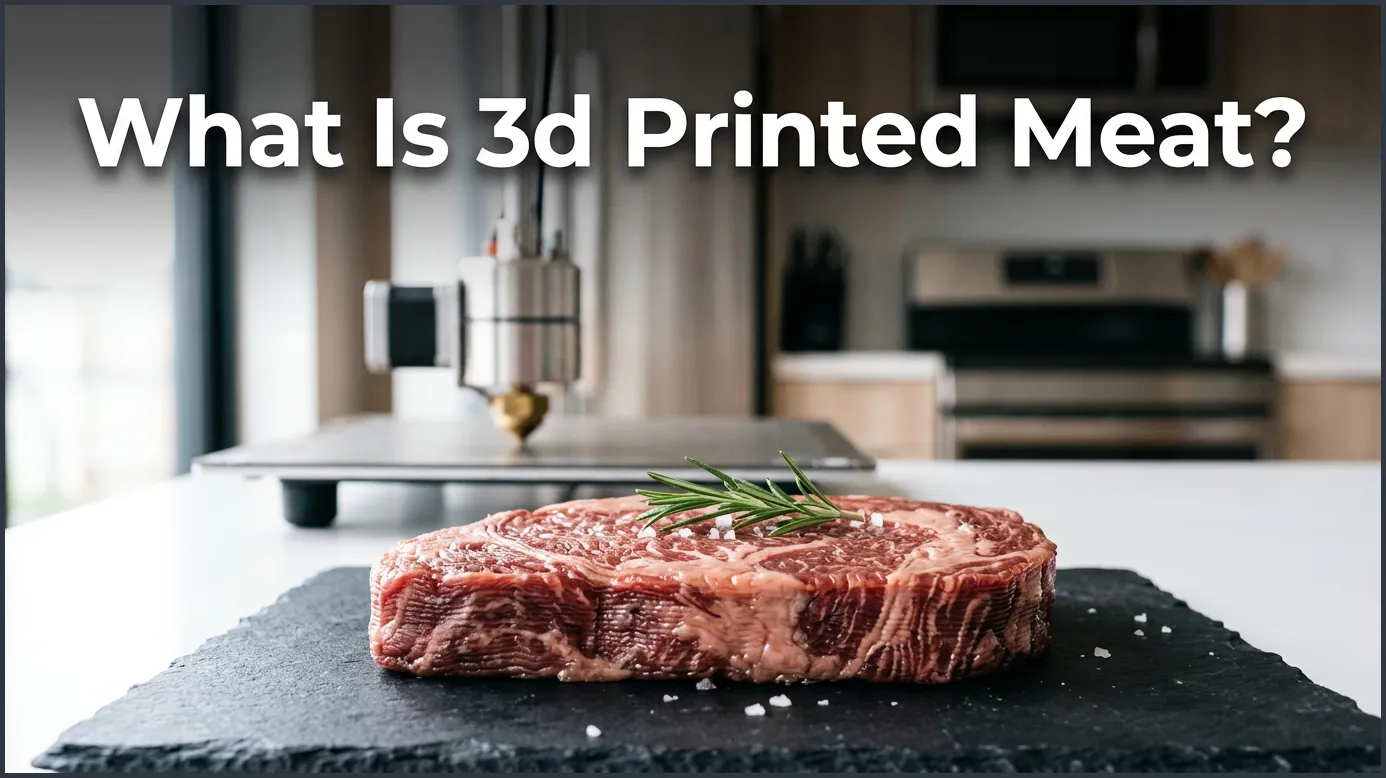
3D printed meat is an innovative food product created layer by layer using specialized food printers and nutritious ingredients. This cutting-edge technology can utilize plant-based pastes or cultured animal cells to mimic the exact texture, flavor, and appearance of traditional meat. By offering a sustainable and ethical alternative to industrial farming, it represents a major shift in how we think about our food.
Imagine sitting down for dinner in a cozy restaurant. You look at your plate. A juicy, warm steak sits right in front of you. It smells amazing. It has the perfect brown crust on the outside. When you cut into it, it looks exactly like beef. But this steak did not come from a farm. A high-tech machine printed it in a laboratory just hours ago.
We are living in an era where science fiction is becoming real. Technology is changing how we live, travel, and now, how we eat. Many people are looking for new ways to enjoy their favorite foods without harming the planet. This quest has led to some incredible breakthroughs in the food industry.
You might wonder how a machine can make something as complex as a steak. It sounds almost impossible. Yet, scientists and chefs are working together to make it a common reality. Let us explore how this amazing technology works and what it means for your next meal.
Key Takeaways
- Advanced Technology: 3D printed meat is built layer by layer using digital blueprints and precise nozzles.
- Two Main Types: It can be made from sustainable plant-based materials or real animal cells grown in a lab.
- Environmental Benefits: This food source uses much less land, water, and energy than traditional farming.
- Ethical Choice: Cultured cell printed meat does not require animal slaughter, making it highly ethical.
- Health Customization: Printers can adjust fat levels and add vitamins to create healthier meals.
- Future of Food: While still expensive, this technology is slowly moving into high-end restaurants and grocery stores.
Quick Answers to Common Questions
Is 3D printed meat safe to eat?
Yes, printed meat is highly sterile and safe to eat. It is made in clean environments that prevent the spread of harmful bacteria.
Does printed meat taste like real meat?
Yes, scientists design the fat and muscle layers to closely mimic the exact flavor and texture of real meat.
Is printed meat vegetarian?
Some printed meat is completely plant-based and suitable for vegetarians, while other types use real animal cells grown in labs.
Can you buy printed meat in stores today?
It is currently available in select high-end restaurants and specialty shops, but it is not yet common in local grocery stores.
How long does it take to print a steak?
Depending on the printer, it can take anywhere from a few minutes to several hours to construct a full steak.
📑 Table of Contents
How Does the Printing Process Work?
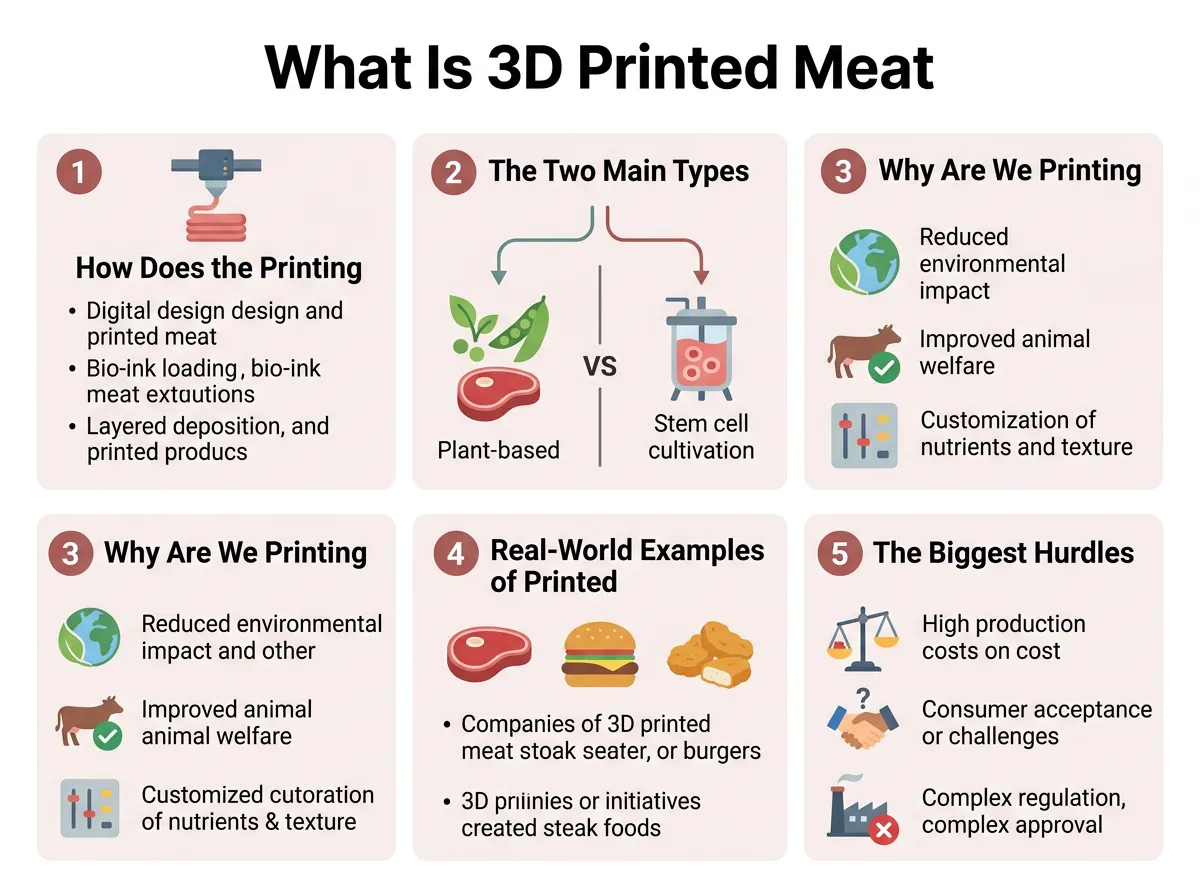
The concept of printing food sounds strange at first. However, the basic steps are very simple to understand. It is much like a regular office printer, but it uses thick paste instead of colored ink.
Creating the Digital Blueprint
Every printed steak starts on a computer screen. Designers use special software to draw a 3D model of the meat. They can program exactly where the fat should go. They can design the perfect marbling. This digital file tells the printer exactly where to move and how much material to drop.
Loading the Food Ink
Instead of paper ink cartridges, workers load the machine with syringes of “food ink.” This ink is a thick paste made of healthy ingredients. If the chef wants to make a beef steak, they use red and white pastes. The red paste mimics the muscle, while the white paste mimics the juicy fat.
Layer-by-Layer Assembly
Once the printer starts, the nozzle moves back and forth. It places tiny, precise drops of paste onto a tray. It builds the food from the bottom up. Layer after layer, the food takes shape. Within a few minutes, a fresh, raw steak is ready to be cooked and served.
The Two Main Types of Food Ink
Not all printed meats are made of the same materials. Today, there are two primary ways that scientists create the food ink used in these machines.
What Is 3D Printed Meat? — key points at a glance
Plant-Based Printed Meat
The most common printed meat on the market today comes from plants. Scientists use proteins from peas, soy, and wheat. They mix these proteins with water, oils, and natural colorings. Beets are often used to give the paste a natural red color. For example, some brands offer delicious plant-based steaks and kebabs that cook just like real meat. These ingredients are safe, healthy, and easy to source.
Lab-Grown Animal Cells
The second type uses real animal cells. This is often called cultured meat or cell-based meat. Scientists take a tiny, harmless cell sample from a live cow or chicken. They place these cells in a warm tank with nutrients. The cells grow and multiply. Once they have enough cells, they turn them into a paste. This paste is used as ink to print real meat. This field of cutting-edge 3D printed meat technology is growing fast. It gives people real meat without the need for slaughterhouses.
Why Are We Printing Our Food?
You might ask why we should print meat when we already have farms. There are several very important reasons for this shift.
Saving Our Planet
Traditional farming takes a massive toll on our Earth. It uses huge amounts of land and fresh water. Cows also produce methane, which is a greenhouse gas. Printing food is much cleaner. It uses up to 95% less land and water. This makes it a great tool to fight climate change.
Treating Animals Better
Many people feel uneasy about how farm animals are treated. Printing meat removes the need to raise and slaughter millions of animals. It allows us to enjoy our favorite meals with a clean conscience. It is a much kinder way to feed a growing global population.
Making Meals Healthier
With a printer, we have total control over the ingredients. Do you want a steak with less saturated fat? The printer can easily do that. Do you need extra vitamins or iron? We can mix those directly into the paste. This could help doctors create custom diets for patients who need specific nutrients.
Real-World Examples of Printed Meat
This technology is not just sitting in a laboratory. It is already hitting the market in exciting ways around the world.
Seafood and Steaks
Some companies are now printing complex fish products. For instance, you can find printed salmon and tuna that flake apart just like real fish. Innovative brands like Steakholder Foods are creating amazing 3D printed seafood and meat structures. These products offer the same rich taste as ocean fish without the risk of microplastics or mercury.
Scientific Approval and Safety
Health experts are studying these new foods very closely to ensure they are safe. A research paper from the National Institutes of Health database shows how safe and nutritious printed food can be. Tests show that printed meat is clean and free of the harmful bacteria often found in traditional meat packing plants.
The Biggest Hurdles on the Plate
Even though this technology is exciting, we still face a few big challenges before it becomes a household item.
High Production Costs
Right now, these food printers are very expensive to build and run. Growing animal cells in a lab also costs a lot of money. Because of this, a printed steak can cost much more than a regular steak at the grocery store. Scientists are working hard to make the process cheaper.
The “Yuck” Factor
People can be very picky about what they eat. The idea of eating food from a printer sounds strange or unnatural to many. It will take time, education, and many free tastings for consumers to feel comfortable with this new food option.
A Tasty Look Into the Future
What does the future hold for this technology? In a few years, you might have a small food printer right on your kitchen counter. You could download a recipe from your favorite chef. You would load the food pods, press button, and watch your dinner print in front of your eyes. It is an amazing blend of science, cooking, and sustainability. While it may take time to get used to the idea, this technology could be the key to a healthier, kinder, and greener world.
Frequently Asked Questions
What materials are used to make the food ink?
The ink is typically made of plant-based proteins like soy and peas, mixed with natural oils and beet juice for color. Some advanced printers use real animal muscle and fat cells grown in a lab environment.
Will 3D printed meat replace traditional meat?
It is unlikely to replace traditional meat entirely in the near future, but it will offer a popular, eco-friendly alternative. As technology improves, it will become a common choice alongside farm-raised options.
Does printed meat have the same nutritional value?
Yes, it can have the same or even better nutritional value than regular meat. Scientists can easily add extra vitamins, minerals, and healthy fats directly into the food paste.
How do they get the texture of a real steak?
The printer uses a precise nozzle to mimic the natural fibers of animal muscle. By layering fat and muscle in specific patterns, it achieves the chewy feel of a real steak.
Is printed meat environmentally friendly?
Yes, it is much better for the environment because it requires far less land, water, and energy. It also produces almost no greenhouse gases compared to raising live cattle.
How much does a printed steak cost right now?
Currently, printed steaks are expensive luxury items because the printing machines and lab cells are costly to produce. However, prices are expected to drop quickly as the technology scales up.
