


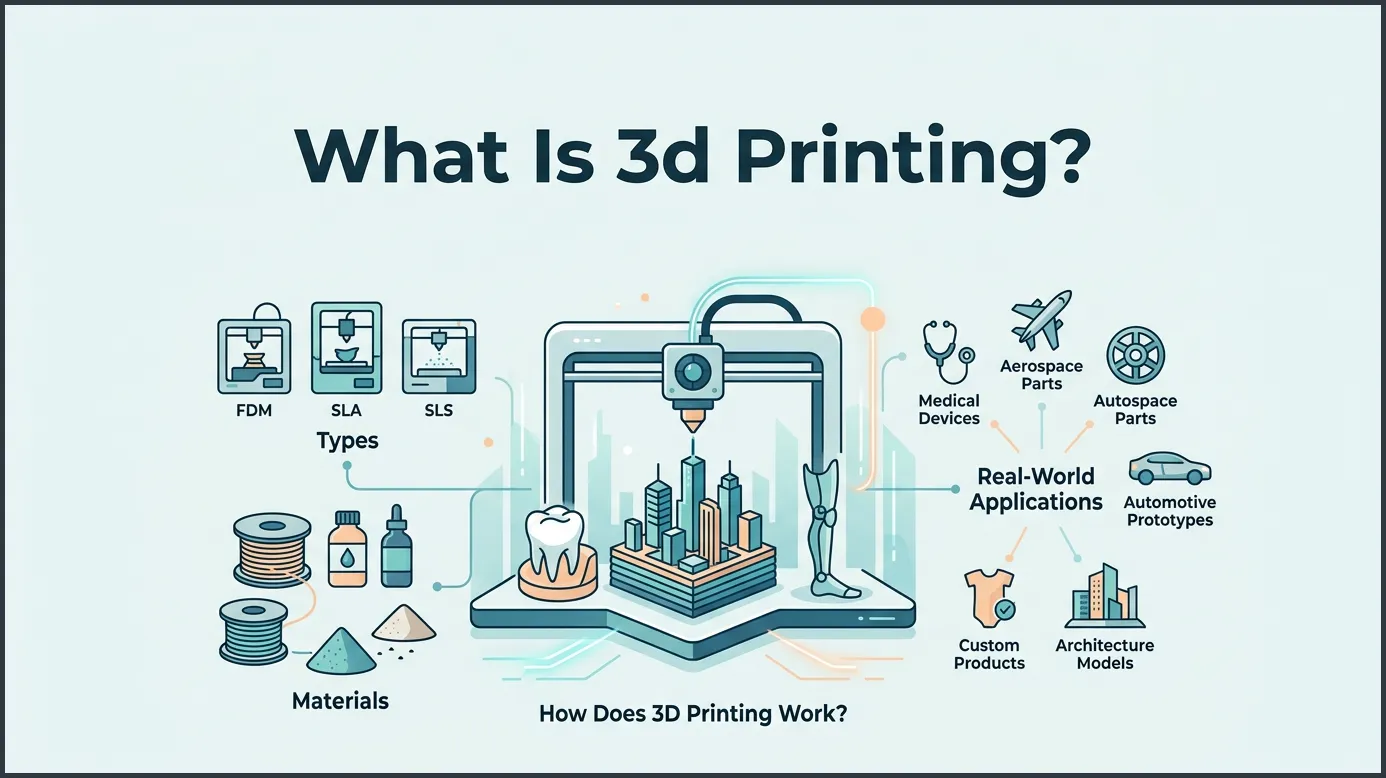
3D printing is a process that creates three-dimensional solid objects from a digital file by laying down successive layers of material. Also known as additive manufacturing, it allows you to design and print complex items right from your desk. From custom toys to medical implants, this technology is changing how we make everything.
Imagine you want a custom phone case. In the past, you had to search stores to find one. If your idea was unique, you could not buy it anywhere. Today, you can make it yourself at home in just a few hours. You do not need a giant factory. You only need a small machine that sits on your desk.
This amazing tool is changing how we think about making things. Many people wonder, “What Is 3D Printing?” and how does it actually work? It seems like science fiction, but it is very real. It is a technology that touches many parts of our lives today.
In this article, we will explore this cool technology together. We will look at how these machines work. We will talk about the different types of printers and materials. We will also share simple tips so you can start your own printing journey. Let us dive in!
Key Takeaways
- Layer-by-layer building: 3D printing makes objects by adding material one thin layer at a time.
- Endless design options: You can create complex shapes that traditional manufacturing cannot easily make.
- FDM is the most common type: Fused Deposition Modeling (FDM) uses melted plastic and is great for beginners.
- Slicing software is key: This software translates 3D digital models into instructions the printer can read.
- Diverse materials: Printers can use plastics, resins, metals, and even food to create items.
- Saves time and money: It allows for rapid prototyping, which speeds up product development.
Quick Answers to Common Questions
Can you 3D print metal?
Yes, industrial 3D printers can print metal using strong lasers to melt metal powder layer by layer. This is common in the aerospace and medical industries.
How long does it take to print an object?
A small print can take less than an hour, while large or complex objects can take several days to finish. The speed depends on the size of the object and the print settings.
Is 3D printing expensive?
Basic home printers are very affordable today, often costing under two hundred dollars. However, the materials and professional-grade machines can be much more expensive.
What is the most common material used?
PLA plastic is the most common material because it is cheap, easy to use, and made from natural resources like cornstarch. It does not produce bad smells during printing.
Can you make money with a 3D printer?
Yes, many people make money by selling custom toys, replacement parts, or unique art. You can also offer printing services to people who do not own a printer.
📑 Table of Contents
How Does 3D Printing Work?
Traditional manufacturing often cuts away material. Think of a sculptor. They start with a big block of stone. They chip away the extra parts until they have a statue. This is called subtractive manufacturing. It wastes a lot of material.
3D printing is different. It is an additive process. This means it builds things from the bottom up. It places material only where it is needed. It adds layer upon layer until the object is complete. To learn more about this basic process, you can read this comprehensive guide to 3D printing.
The Digital Design
Every print starts as a digital file on a computer. You need a 3D model of your object. You can create this model using Computer-Aided Design (CAD) software. Do not worry if you cannot draw. There are many websites where you can download free designs made by others.
Slicing the Model
Once you have your 3D model, you cannot just send it to the printer. The printer does not understand a whole 3D shape. It needs a special software called a slicer. The slicer cuts the digital model into hundreds of thin, flat horizontal layers. It then writes a set of instructions. This code tells the printer exactly where to move, how fast to go, and where to release material.
The Printing Process
Now, the machine goes to work. The printer reads the instructions from the slicer. It heats up its nozzle or starts its light source. Then, it begins to lay down the first layer. Once that layer is done, the printer moves up a tiny fraction of a millimeter. It prints the next layer right on top of the first one. This repeats over and over until the object is fully formed.
The Most Common Types of 3D Printing
There are several ways to print in 3D. Different machines use different technologies to build the layers. When people ask, “What Is 3D Printing?”, they are often thinking of one of three main types.
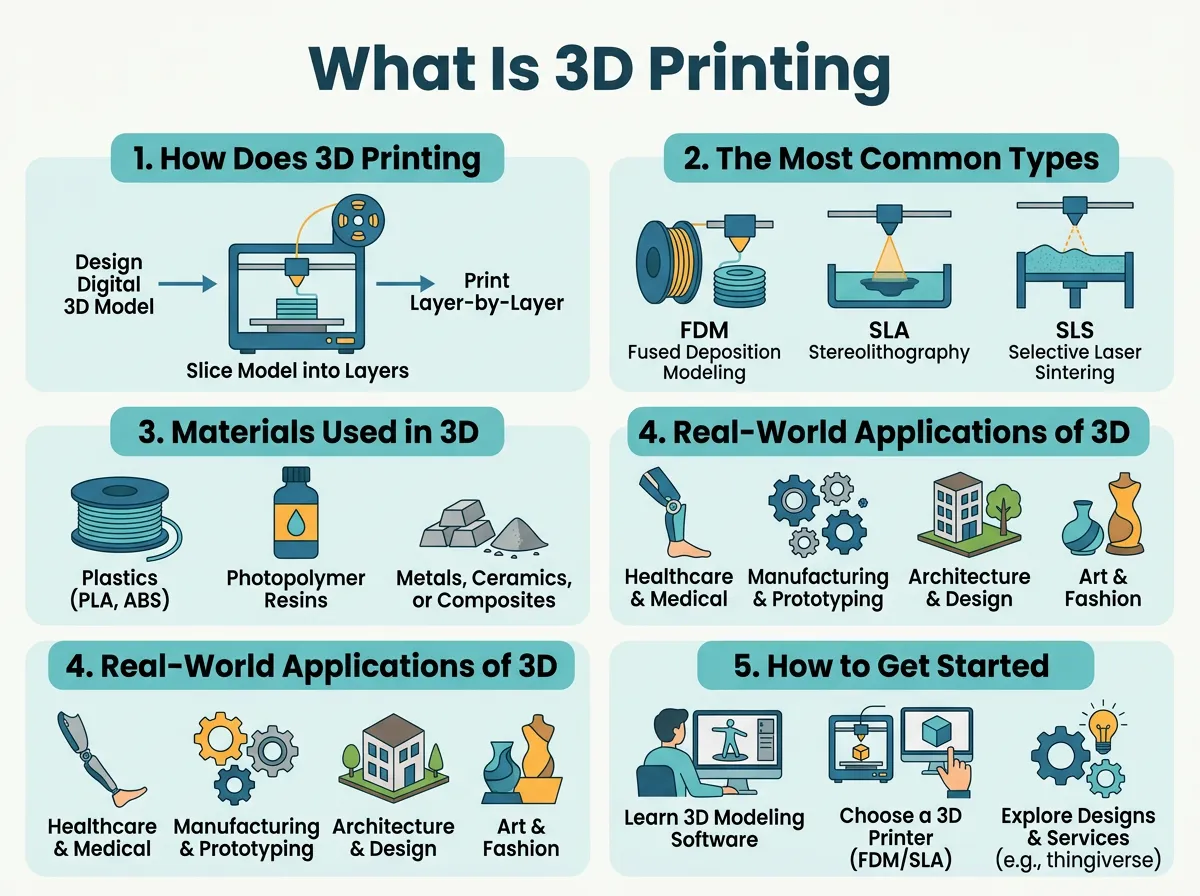
What Is 3D Printing? — key points at a glance
Fused Deposition Modeling (FDM)
FDM is the most popular type of printer. It is cheap and easy to use. These printers use a roll of plastic string called filament. The printer pushes the filament through a hot nozzle. The plastic melts and flows out. The nozzle moves around, drawing the shape of each layer. The plastic cools and hardens almost instantly.
Stereolithography (SLA)
SLA printers use light instead of heat. Instead of plastic filament, they use a pool of liquid resin. A UV laser shines into the liquid. The light cures the resin, turning it into solid plastic. The print bed moves up, and the laser draws the next layer. SLA printers are great for tiny details. They make very smooth models.
Selective Laser Sintering (SLS)
SLS is a professional technology. It uses a powder, often nylon. A strong laser melts the powder particles together. After each layer, a roller spreads a new layer of powder over the top. This type of printing does not need support structures. The loose powder holds up the model as it prints.
Materials Used in 3D Printing
You can print with many different materials. The material you choose depends on your printer and your project goals.
Standard Plastics
PLA is the best plastic for beginners. It is made from cornstarch, so it is non-toxic and smells sweet when heated. It comes in many bright colors. ABS is another common plastic. It is stronger than PLA and can handle high heat. However, it can smell bad when printing and needs a heated printer bed.
Liquid Resins
Resins are used in SLA printers. They are liquid chemicals that harden under UV light. You can get standard resin for model figures. You can also buy tough resin for functional parts. Some resins are flexible, like rubber.
Advanced Materials
Industrial printers can use amazing materials. Some can print with metals like titanium or steel. Others use clay or concrete to print houses. There are even printers that use chocolate or sugar to make edible art!
Real-World Applications of 3D Printing
If you ask a doctor, “What Is 3D Printing?”, they will tell you it is a medical revolution. This technology is changing major industries around the world.
Healthcare and Medicine
Doctors use printers to save lives. They can print custom prosthetics that fit a patient perfectly. Dentists use SLA printers to make clear aligners for teeth. Scientists are even working on printing human organs using living cells.
Aerospace and Automotive
Airplanes and cars need to be light and strong. 3D printing lets engineers design parts with hollow structures. These parts are very strong but weigh much less than solid metal. This saves fuel and improves speed.
Creative and Hobbyist Projects
Many artists use this technology to create unique art. Hobbyists print parts for board games, cosplay armor, and custom gadgets. If you want to see some amazing creative designs, check out the MochiMakes3D community page. It shows how everyday people use these tools to make fun art.
How to Get Started with Your First Printer
Are you ready to try it yourself? Getting started is easier than ever.
Choosing the Right Printer
For your first printer, an FDM printer is best. They are safe, affordable, and easy to maintain. Look for a printer with a large online community. This makes it easy to find help if you have questions.
Finding Free 3D Models
You do not need to know how to design models yet. Websites like Thingiverse and Printables have millions of free files. You can download these files and print them right away.
Essential Safety Tips
Always print in a well-ventilated room. Some plastics can release fumes. Never touch the print nozzle or the print bed when they are hot. They can reach temperatures over 200 degrees Celsius!
The Future of Additive Manufacturing
The world of printing is growing fast. We are moving beyond simple plastic shapes.
Scientists are now researching new methods. One exciting area is 4D printing. In this process, printed objects can change shape over time. They react to things like water, heat, or light. To learn more about this future, watch this video on the emergence of 4D printing.
Soon, we might have printers in every home. Instead of shipping products, companies might just send us digital files. We will print our own shoes, tools, and spare parts right at home.
Conclusion
Now you know the answer to the question: What Is 3D Printing? It is a powerful way to turn ideas into physical objects. It is simple enough for kids to learn but powerful enough to build rockets. Whether you want to print a simple toy or start a business, this technology offers endless possibilities. Grab a printer, find a model, and start creating today!
Frequently Asked Questions
Is 3D printing hard to learn?
No, it is quite easy to learn the basics. Most beginners can set up their printer and start printing free models online on their very first day.
Do I need to know how to code?
You do not need to know any coding to use a 3D printer. The slicer software does all the coding work for you with just a few clicks of your mouse.
Can you 3D print food?
Yes, special food printers can use materials like chocolate, cheese, or pasta dough. They squeeze out the food in layers to make beautiful and delicious designs.
What is the difference between SLA and FDM printers?
FDM printers melt plastic filament through a hot nozzle to build layers. SLA printers use UV light to harden liquid resin, which allows for much higher detail.
Are 3D printed items strong?
The strength depends on the material you use and the design settings. Items printed with materials like ABS or nylon can be extremely strong and durable.
Is 3D printing bad for the environment?
It can be eco-friendly because it only uses the exact amount of material needed, reducing waste. However, using petroleum-based plastics can create plastic waste if not recycled properly.
