


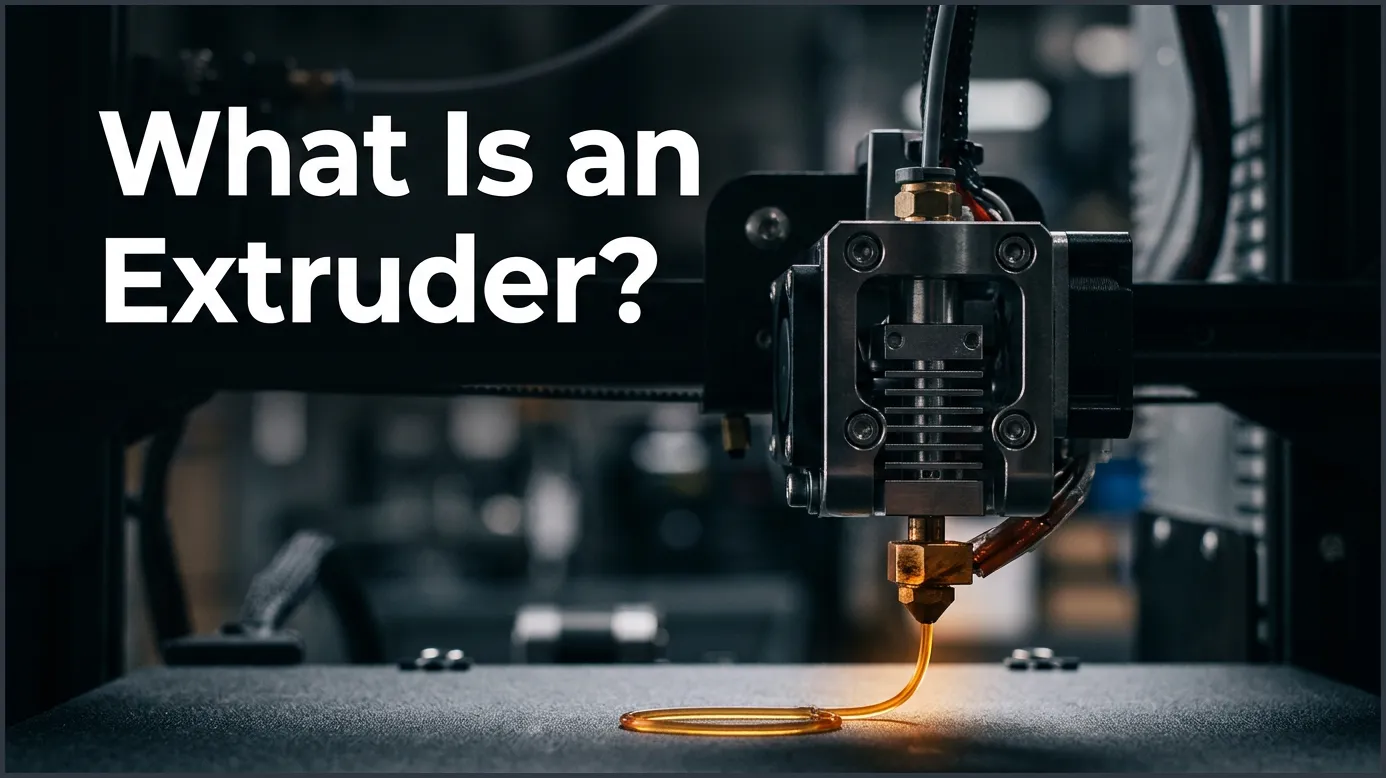
An extruder is a highly efficient manufacturing machine that melts raw materials and forces them through a shaped die to create continuous products with a uniform profile. This versatile tool is essential for producing everyday items like plastic pipes, window frames, snack foods, and 3D printer filaments. By using heat, pressure, and a rotating screw, it transforms raw solids into precisely shaped, finished goods.
Imagine walking through your local grocery store. You see rows of pasta, colorful boxes of cereal, and bottles of water. Next, picture your home. You have plastic pipes under your sink, vinyl frames around your windows, and maybe a 3D printer sitting on your desk. All of these items seem very different. However, they share a surprising common origin. They all exist because of a single, highly efficient manufacturing process.
If you have ever wondered how factories make long, uniform objects so quickly, you are in the right place. We often take these everyday items for granted. Yet, the technology behind them is a marvel of modern engineering. It bridges the gap between raw ingredients and the clean, structured products we rely on every single day.
In this guide, we will dive deep into this fascinating machine. We will explore how it works step-by-step. We will also look at the different types you can find in factories, and see how they shape various industries. By the end of this post, you will look at everyday plastic items and food products in a whole new way.
Key Takeaways
- Core Purpose: Extruders shape materials by melting them and pushing them through a specialized mold called a die.
- Key Components: The machine relies on a hopper, a heated barrel, a rotating screw, and a shaping die to do its job.
- Major Types: Manufacturers choose between simple single-screw machines and advanced twin-screw systems for mixing.
- Broad Versatility: This technology plays a massive role in the plastics, food processing, and 3D printing industries.
- Continuous Production: Unlike batch systems, extrusion operates non-stop, creating miles of product with minimal waste.
- Easy Shape Customization: Operators can change the shape of the final product simply by swapping out the die plate.
Quick Answers to Common Questions
What is the main purpose of an extruder?
The main purpose of an extruder is to melt raw materials and push them through a shaped die to create continuous products with a consistent profile.
What materials can be extruded?
This process works with a wide range of materials, including plastics, metals, clays, food doughs, and rubber.
What is the difference between single and twin screw extruders?
A single-screw machine uses one screw for simple shaping, while a twin-screw machine uses two screws to mix and blend complex materials.
How is 3D printing related to extrusion?
Most 3D printers use a small, heated extruder to melt plastic filament and build objects layer by layer.
Why is extrusion considered efficient?
It is efficient because it runs continuously without stopping, produces very little waste, and can easily change shapes by swapping the die.
📑 Table of Contents
The Toothpaste Analogy: Understanding Extrusion
Let us talk about squeezing a tube of toothpaste. When you squeeze the tube, paste comes out in a neat, round stream. The opening of the tube is round. Therefore, the toothpaste becomes a round cylinder. If the opening were star-shaped, the toothpaste would come out as a star. This simple process is exactly how extrusion works on a larger scale.
An extruder is simply a machine that performs this task with raw materials. It takes solid materials, warms them up until they are soft, and pushes them through a shaped opening. This opening is called a die. The material then cools down and hardens, keeping the shape of the die. You can learn more about this simple concept by reading how industrial extruders work on the Bausano extruder guide, which details the basic physics of the process.
How Does an Extruder Work?
The entire process is a team effort. Each part of the machine has a specific job to do. Let us look at the journey of a raw material as it travels through the system.
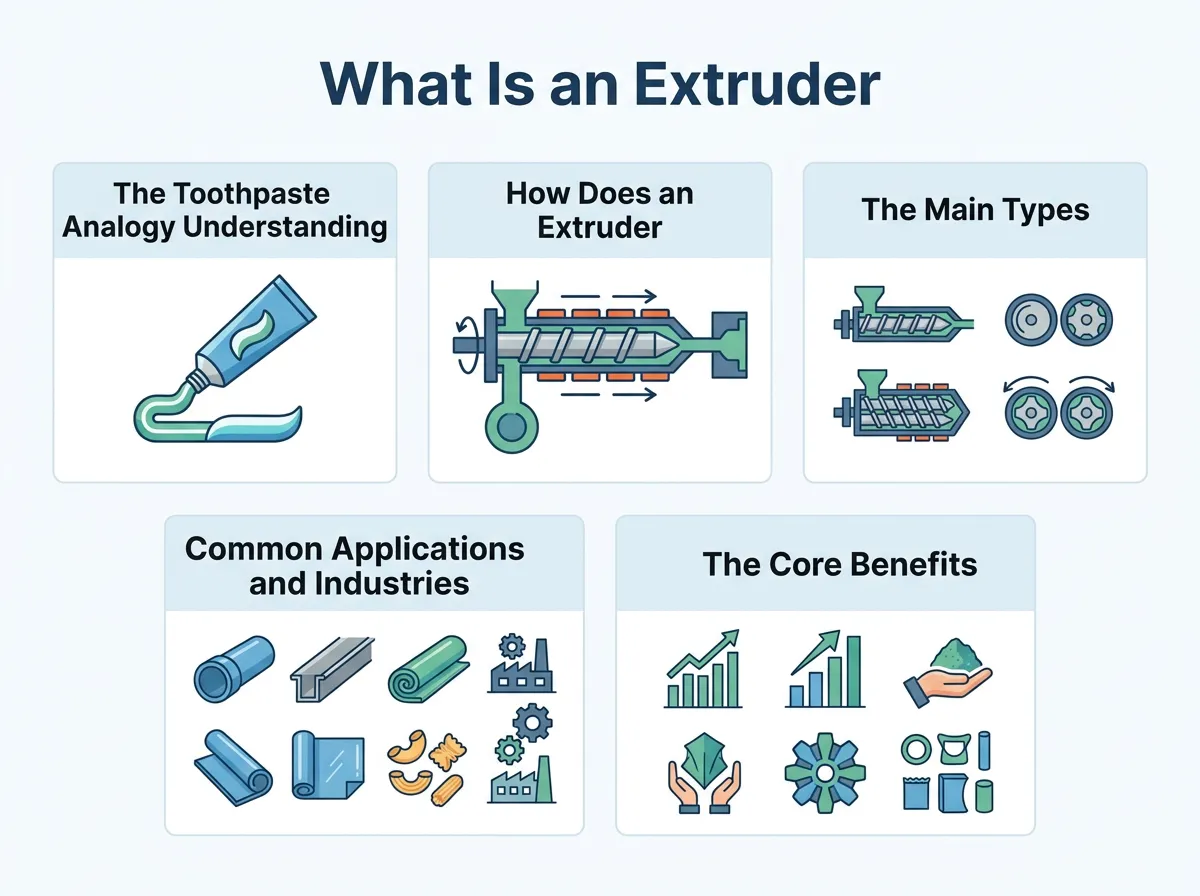
What Is an Extruder? — key points at a glance
Step 1: The Hopper
The journey starts at the hopper. Think of the hopper as a large funnel. Operators dump raw materials into this funnel. These materials are often in the form of small plastic beads, pellets, or dry powder. Gravity pulls these materials down into the main body of the machine.
Step 2: The Barrel and Screw
Once the material leaves the hopper, it enters the barrel. Inside this heated metal cylinder sits a large rotating screw. This screw is the heart of the system. As the screw turns, it pushes the material forward. The barrel is wrapped in electric heaters. These heaters, combined with the friction from the spinning screw, melt the raw material. It turns from a hard solid into a thick, warm liquid.
Step 3: The Die
At the end of the barrel, the melted material reaches the die. The die is a custom metal plate with a specific shape cut into it. The screw pushes the molten material through this opening with immense force. As the material exits, it takes on the shape of the opening. It is like a cookie press making star-shaped cookies.
Step 4: Cooling and Cutting
When the material first exits the die, it is still very hot and soft. It needs to cool down quickly to keep its shape. To do this, the shaped material passes through a water bath or under cool air blowers. Once it cools down and hardens, a automated blade cuts it into the desired lengths.
The Main Types of Extruders
Not all machines are built the same way. Manufacturers use different designs depending on the materials they use and the products they want to make.
Single-Screw Extruders
This is the most common and simple type. It uses a single spinning screw inside the barrel. These machines are highly reliable and easy to maintain. They work wonders for simple tasks like making pipes or sheets. They are also cost-effective, making them popular for small and medium businesses.
Twin-Screw Extruders
As the name suggests, this machine uses two screws. These screws sit side-by-side inside the same barrel. They can spin in the same direction or in opposite directions. Twin-screw systems offer superior mixing capabilities. They are perfect for mixing different materials together, such as combining color dyes with plastic. For a deeper look into the science behind these systems, you can explore the ScienceDirect extruder reference page to see how different setups handle various materials.
Common Applications and Industries
This technology is incredibly versatile. You can find these machines in many different sectors, shaping the products we use daily.
Plastics and Manufacturing
The plastic industry is the biggest user of this technology. It helps create plastic pipes, hoses, window frames, and vinyl siding. It also makes thin films for plastic bags and packaging. If you look at a plastic pipe, you are looking at a product made by a pipe extrusion system. To see how these industrial lines operate in real-world pipe production, check out the DRTS extruder overview, which highlights pipe manufacturing setups.
Food and Snack Production
Did you know your breakfast might be extruded? Many popular cereals are made this way. The machine mixes grain flour, water, and sugar. It cooks the mix using heat and pressure, then forces it through a die to make fun shapes. The sudden drop in pressure as it exits causes the snack to puff up. This is how we get puffed corn, pasta, and even dry pet food.
3D Printing
If you own a desktop 3D printer, you have a mini version of this machine in your home. The print head contains a small motor, a heater, and a nozzle. It pulls in a plastic wire, melts it, and pushes it out of a tiny hole. By moving around in precise patterns, it builds up objects layer by layer.
The Core Benefits of Using an Extruder
Why do companies love this process? There are several great reasons that make it a favorite in factories.
First, it is a continuous process. Unlike molding, which makes one item at a time, this machine runs non-stop. It can run for hours or even days, making miles of product without stopping. This high speed keeps production costs low.
Second, it creates very little waste. Any leftover scraps can often be melted down and used again in the next batch. This is great for both the environment and the company’s budget.
Third, it is highly flexible. If you want to make a different shape, you do not need a brand new machine. You simply change the metal die plate at the end of the barrel. This allows factories to switch products quickly.
Practical Tips for Best Results
If you plan to work with this machinery, keeping a few simple tips in mind will save you a lot of trouble.
- Monitor Temperatures: Keep a close eye on your heat settings. If the barrel is too hot, the material might burn. If it is too cold, the screw can jam.
- Keep Materials Dry: Wet materials can create steam and air bubbles inside the barrel. This makes your final product weak and full of ugly holes.
- Clean Regularly: Always clean the screw and die after a run. Leftover material can harden and cause blockages during your next project.
Conclusion
In summary, this machine is an unsung hero of modern life. It shapes the plastics that protect our cables, the pipes that carry our water, and the food that fills our bowls. It is simple in concept, yet incredibly powerful in practice. The next time you hold a plastic pen or eat a bowl of puffed cereal, you will know exactly how it was made.
Frequently Asked Questions
What is an extruder die?
The die is a sturdy metal plate located at the very end of the machine. It has a custom-shaped hole cut through it, which shapes the melted material as it is pushed out. Changing the die allows the machine to make entirely different products, like switching from a round pipe to a flat sheet.
Can food be made using an extruder?
Yes, many everyday food items are made using this process. Examples include pasta, ready-to-eat breakfast cereals, pet food, and puffed snacks. The machine cooks and shapes the ingredients under pressure all in one single step.
What is the hopper on an extruder?
The hopper is the funnel-shaped container located at the start of the machine. It holds the raw plastic pellets or ingredients and feeds them smoothly into the heated barrel. This ensures a steady supply of material for continuous production.
What is the difference between extrusion and injection molding?
Extrusion is a continuous process used to make long, uniform shapes like pipes, hoses, and sheets. Injection molding is a batch process that injects melted plastic into a closed mold to make individual, complex parts like toys or bottle caps.
Why do extruders get hot?
Extruders get hot because they use electrical heaters wrapped around the barrel to melt the raw materials. Additionally, the mechanical friction generated by the spinning screw as it pushes the material forward creates a large amount of natural heat.
Is extrusion eco-friendly?
Yes, extrusion is generally considered eco-friendly because it produces very little material waste. Any excess or scrap material from the process can usually be ground up, melted down, and put right back into the machine to be used again.
