


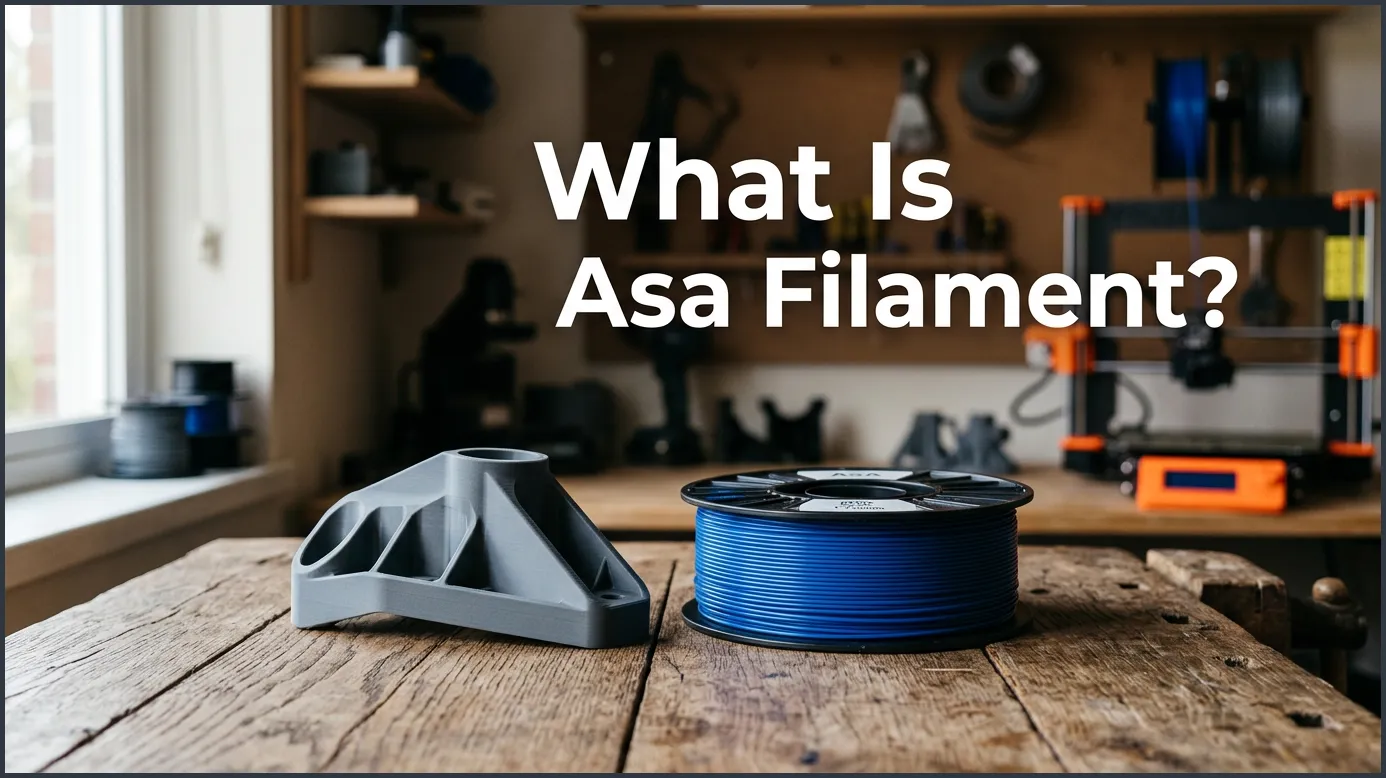
ASA filament, or Acrylonitrile Styrene Acrylate, is a highly durable 3D printing material built to survive the elements. It acts like a tougher, UV-resistant sibling to ABS, making it the perfect choice for outdoor parts, automotive pieces, and heavy-duty functional prototypes.
Imagine leaving a 3D-printed bracket out in the burning summer sun. A few months later, it turns yellow, becomes brittle, and snaps like a dry twig. If you have ever used PLA or ABS for outdoor projects, you likely know this pain. Standard plastics just cannot handle the harsh combination of heat, wind, rain, and sunlight. That is where a unique polymer steps in to save your outdoor builds.
When you need a part that can survive the elements, you need a material built specifically for the job. In this guide, we will explore the ins and outs of this amazing material. We will look at its chemical roots, its biggest benefits, and how it compares to other popular filaments. Plus, you will get practical tips on how to print it perfectly without warping or cracking.
Key Takeaways
- UV Resistance: ASA does not yellow, fade, or degrade under direct sunlight.
- High Strength: It offers exceptional impact resistance and thermal stability.
- Outdoor Champ: It is the best choice for automotive, marine, and outdoor applications.
- Challenging Print: It requires a heated bed and an enclosure to prevent warping and cracking.
- Matte Finish: Provides a clean, professional look that hides layer lines extremely well.
- Post-Processing: Can be easily sanded, painted, or smoothed using acetone vapor.
Quick Answers to Common Questions
Does ASA filament need an enclosure to print?
Yes, ASA requires an enclosure to maintain warm ambient air and prevent warping, cracking, or layer splitting during printing.
Is ASA filament stronger than PLA?
Yes, ASA is significantly stronger, more impact-resistant, and has much higher heat resistance than PLA.
Does ASA filament release toxic fumes?
Yes, printing ASA releases styrene fumes, which can be harmful, so you must print in a well-ventilated space or use an air filtration system.
Can you smooth ASA with acetone?
Yes, you can use acetone vapor or liquid to melt and smooth the outer surface of ASA prints for a glossy finish.
Can you print ASA on an open-frame printer?
While possible for very small parts, printing larger ASA parts on an open printer usually results in warping and split layers due to cool drafts.
📑 Table of Contents
What Is ASA Filament?
The Chemistry Behind the Plastic
ASA stands for Acrylonitrile Styrene Acrylate. If that sounds like a mouthful, do not worry. You can think of it as a direct upgrade to traditional ABS. In fact, the two plastics share a very similar chemical makeup. However, there is one key difference. ABS uses butadiene rubber, which breaks down when exposed to ultraviolet light. ASA replaces this with an acrylate ester elastomer. This small swap makes a massive difference in how the plastic behaves over time.
Why UV Resistance Matters
When ultraviolet rays from the sun hit most plastics, they break the chemical bonds. This process makes the plastic weak, faded, and brittle. Because of its unique structure, ASA resists this breakdown. It can sit in the sun for years without losing its strength or turning yellow. If you want to dive deeper into these chemical properties, this BigRep ASA filament overview highlights how it withstands environmental stress and stays strong in extreme conditions.
Key Benefits of Printing with ASA
Weather and Environmental Resistance
The biggest selling point of ASA is its ability to withstand the great outdoors. It does not care about heavy rain, freezing cold, or blistering heat. It does not absorb water easily, so it will not swell or rot. This makes it a top-tier choice for items like weather stations, plant labels, and outdoor signs.
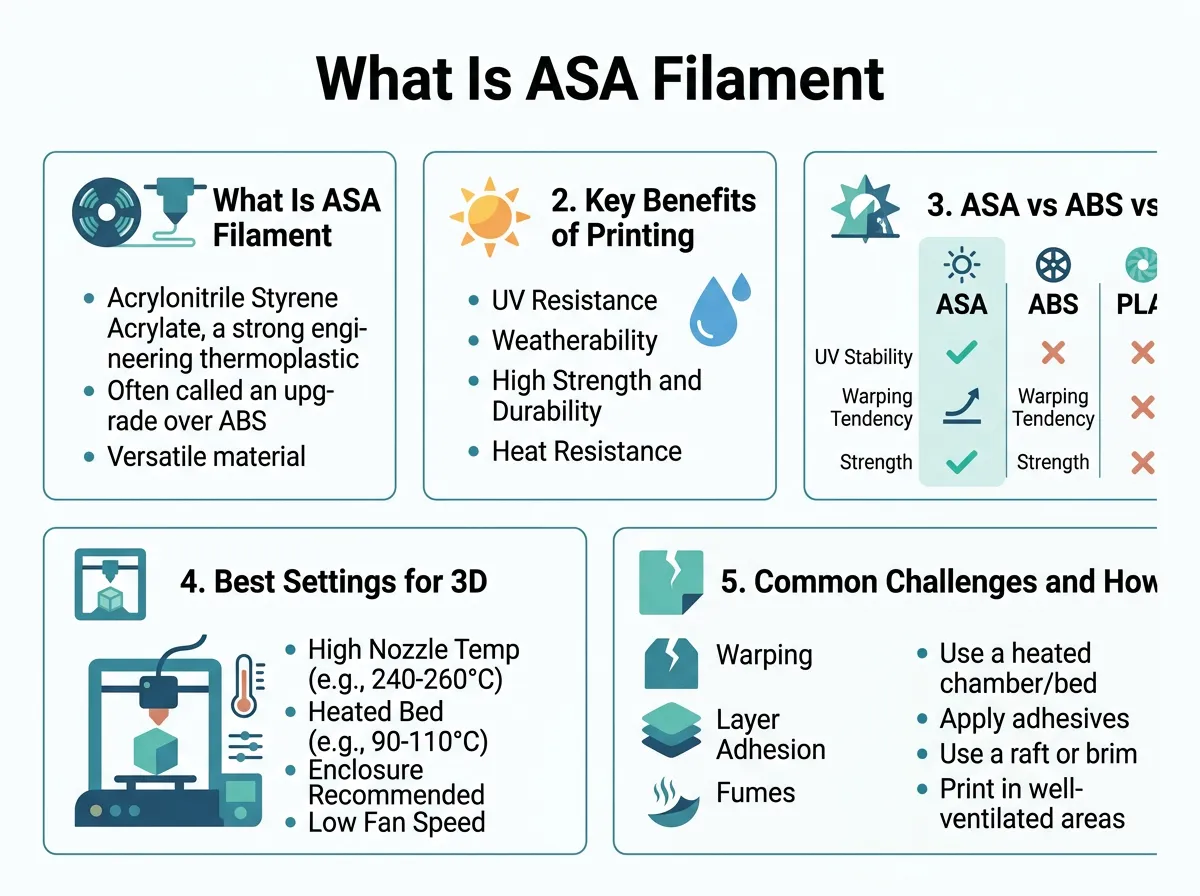
What Is ASA Filament? — key points at a glance
High Heat and Impact Resistance
ASA is incredibly tough. It has a high glass transition temperature of around 100 degrees Celsius (212 degrees Fahrenheit). This means it can sit inside a hot car cabin on a summer day without melting or warping. It also handles impacts very well. If you drop a part made from this material, it is much more likely to bounce than shatter.
Clean Matte Finish
Many 3D printing enthusiasts love ASA for its looks alone. Unlike PLA or ABS, which can look shiny and plastic-like, ASA prints have a beautiful matte finish. This matte texture helps to hide layer lines, giving your finished models a highly professional, injection-molded appearance right off the build plate.
ASA vs. ABS vs. PLA: How Do They Compare?
ASA vs. ABS: The Upgraded Sibling
For a long time, ABS was the go-to choice for functional 3D prints. But ASA is quickly taking its crown. While both materials offer similar strength and heat resistance, ASA is vastly superior outdoors. ABS will yellow and degrade in the sun within months, whereas ASA will look brand new. Furthermore, ASA is slightly easier to print because it warps just a little bit less than ABS, though it still requires care.
ASA vs. PLA: Strength vs. Ease of Use
PLA is the king of ease of use. It prints cold, does not smell, and rarely warps. However, PLA is brittle and melts in hot environments. ASA is the exact opposite. It is highly resistant to heat and impact but requires a lot of effort to print. If you are making a simple desk toy, use PLA. If you are making a functional bracket for your car engine bay, use ASA.
Best Settings for 3D Printing ASA
Hotend and Bed Temperatures
To print this material successfully, you need to turn up the heat. Your extruder temperature should usually sit between 240 and 260 degrees Celsius. Your heated bed needs to be hot too, ranging from 90 to 110 degrees Celsius. Without a hot bed, your print will instantly peel off and warp. For reliable manufacturer-specific profiles, you can check out the Prusa3D guide on ASA filament to get started quickly.
The Importance of an Enclosure
Drafts are the absolute enemy of ASA filament. If a cool breeze hits your print while it is building, the plastic will shrink unevenly. This causes warping, lifting corners, and split layers. To prevent this, you should print inside an enclosure. An enclosure keeps the ambient air warm and stable, which is crucial for successful prints.
Cooling Fan Settings
When printing PLA, you want your cooling fan running at 100% to get sharp details. With ASA, you want to keep the fan off or very low. A fan speed of 0% to 20% is ideal. Too much cooling air will prevent the layers from bonding together, leading to weak prints that split apart easily.
Common Challenges and How to Fix Them
Dealing with Warping and Bed Adhesion
Warping is the most common issue you will face. To keep your prints stuck to the bed, use a textured PEI sheet or apply a layer of glue stick. You can also use a mixture called ABS slurry (scrap plastic dissolved in acetone) on a glass bed. Setting a “brim” or “raft” in your slicer software also adds extra surface area to hold the corners down.
Managing Hazardous Styrene Fumes
Just like ABS, ASA releases styrene fumes when heated. These fumes have a strong, sweet plastic smell and can cause headaches or irritation. Always print in a well-ventilated room. Better yet, use a 3D printer enclosure equipped with an active carbon filter to capture the fumes before they escape into your home. You can learn more about managing print issues in this detailed guide on ASA filament which covers safety and troubleshooting tips.
Post-Processing and Finishing ASA Prints
Acetone Vapor Smoothing
One of the coolest features of ASA is that it is soluble in acetone. This means you can use acetone vapor to smooth out the surface of your prints. By exposing the print to a small amount of acetone vapor in a controlled chamber, the outer layer melts slightly. This erases the layer lines entirely, leaving you with a shiny, glass-like surface that looks like it was injection-molded.
Sanding and Painting
If you prefer a matte look but still want to remove layer lines, ASA sands beautifully. It does not melt or gum up your sandpaper like PLA often does. Once sanded, the surface is highly receptive to primers and paints, allowing you to create stunning, customized outdoor models.
Fantastic Projects to Print with ASA
Automotive and Marine Parts
Because of its heat and UV resistance, ASA is perfect for cars and boats. You can print replacement dashboard knobs, phone mounts, cup holders, or even custom side-mirror housings. These parts will survive the scorching heat of a locked car cabin with ease.
Garden and Outdoor Gear
Need a custom bracket for your solar panels? Or perhaps a replacement nozzle for your garden hose? ASA is the perfect fit. You can print planters, bird feeders, and hose connectors that will last for years in your yard without fading or cracking.
Conclusion
ASA filament is a true workhorse in the 3D printing world. It bridges the gap between hobbyist prints and industrial-grade outdoor parts. While it does require a bit of patience, a heated bed, and a solid enclosure, the results are well worth the effort. Once you master printing with ASA, you will open up a whole new world of durable, functional, and beautiful outdoor projects.
Frequently Asked Questions
Is ASA filament biodegradable?
No, ASA is a synthetic petroleum-based polymer and is not biodegradable. However, its long lifespan means parts do not need to be replaced often, reducing overall waste.
What is the best bed surface for printing ASA?
A textured PEI sheet or a glass bed coated with a dedicated adhesive like glue stick, Magigoo, or ABS juice works best. These surface treatments help keep the corners from lifting.
Can I print ASA with a standard brass nozzle?
Yes, standard brass nozzles work perfectly fine since ASA is not abrasive. You only need hardened steel nozzles if your ASA is infused with carbon fiber or metal fillers.
How should I store ASA filament?
Keep your ASA filament in a dry box or a sealed bag with desiccant packs. It is hygroscopic and will absorb moisture from the air, which can cause bubbles and pops during printing.
Why are my ASA prints splitting between layers?
Layer splitting is usually caused by excessive print cooling fan speeds or ambient drafts. Keep your fan speed below 20% and use an enclosure to solve this issue.
Is ASA filament food safe?
No, raw ASA is not considered food safe, and the FDM printing process leaves tiny gaps where bacteria can easily grow. Avoid using it for food or drink containers.
